Introductory SIV (Safety Training): Course Overview
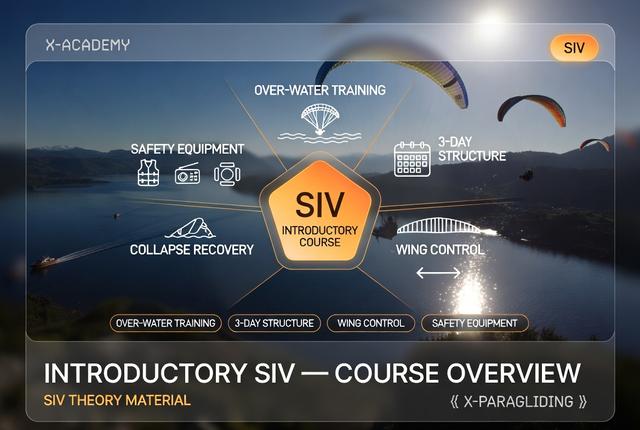
Introductory SIV is the most critical training stage in paragliding, where a pilot first steps out of their comfort zone and learns to manage the wing in unstable modes. This course is not just about performing "tricks"—it is about understanding wing dynamics and controlling fear.
Introductory SIV: Detailed Description of Maneuvers
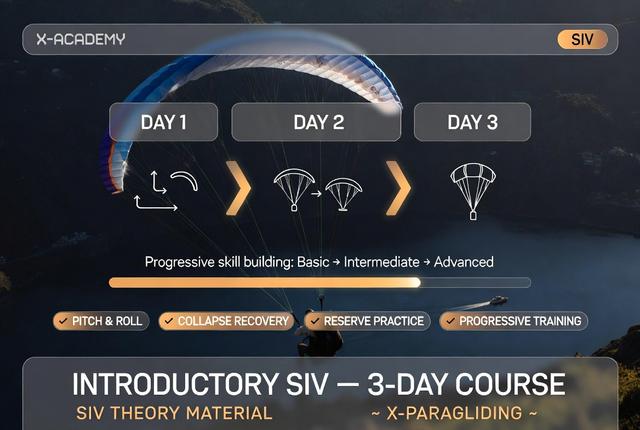
Introductory SIV maneuvers are not just simple exercises—they represent the study of the wing's "language" and dynamics. The practical course is typically designed over 3 days to allow the pilot sufficient time to process information and develop muscle memory.
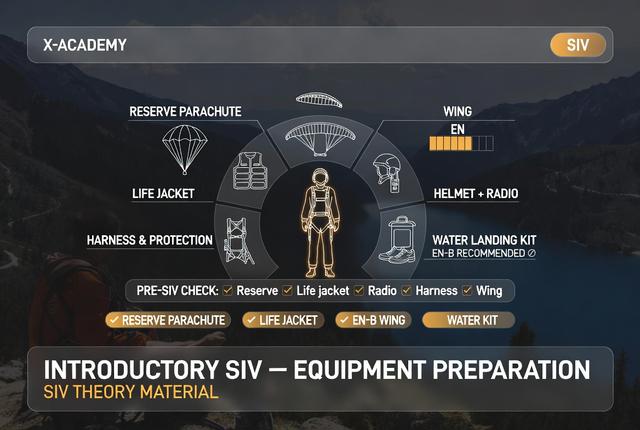
Introductory SIV: Equipment Preparation and Requirements
Preparing equipment for an SIV course is not just a technical routine; it is the construction of your life-support system. Unlike standard flights, equipment during SIV undergoes peak loads, and working over water introduces specific safety requirements. For a T2-level pilot (or future professional), meticulous knowledge of this subject is critical.

Introductory SIV: The Instructor’s Role and Responsibilities
During an SIV course, the instructor is not just a teacher—they are your remote pilot and safety guarantor. During the course, a pilot often loses their sense of space and time (especially during rotations); therefore, the instructor’s "cold mind" and precise commands are the only thread connecting the pilot to safety.

Introductory SIV: Why is this Course Important?
The phrase "from passenger to pilot" perfectly describes the transformation catalyzed by an SIV course. In turbulent air, where split-second decisions are paramount, knowledge is the differentiator between controlled flight and panic. For a T2-level pilot, this is not just about personal safety; it is a core component of professional ethics.