Simulation of incidents occurring during flight and practice of recovery over water, in safe conditions. Three levels — Introductory, Intermediate and Advanced SIV.

Xacademy
SIV — Safety Course
Simulation of incidents occurring during flight and practice of recovery over water, in safe conditions. Three levels — Introductory, Intermediate and Advanced SIV.
3 coursesExplore courses
Xacademy
Courses
Choose a course and explore its learning program.

Foundational Manuvers (Introductory SIV)
Foundational Manuvers (Introductory) Focuses on wing control and basic collapses. It builds the pilot’s confidence in handling common turbulence. Pitch & Roll Control: Mastering the rhythmic movements of the wing. Big Ears: Learning a controlled rapid descent technique. Asymmetric Collapses: Simulating a 50% side collapse and maintaining direction. Frontal (Symmetric) Collapses: Recovering from a full leading-edge collapse.

SIV - Dynamic Manuvers (Intermediate SIV)
Dynamic Manuvers (Intermediate) is Introduces high-energy maneuvers and more aggressive descent methods. Spiral Dives: Learning to manage high G-force descents. B-Stall: A stable, vertical descent technique by pulling the B-risers. Wingovers: Mastering energy management through coordinated turns. Rapid Exit from Spirals: Ensuring a safe transition back to level flight.
Advanced SIV - (Stall and Spin Recovery)
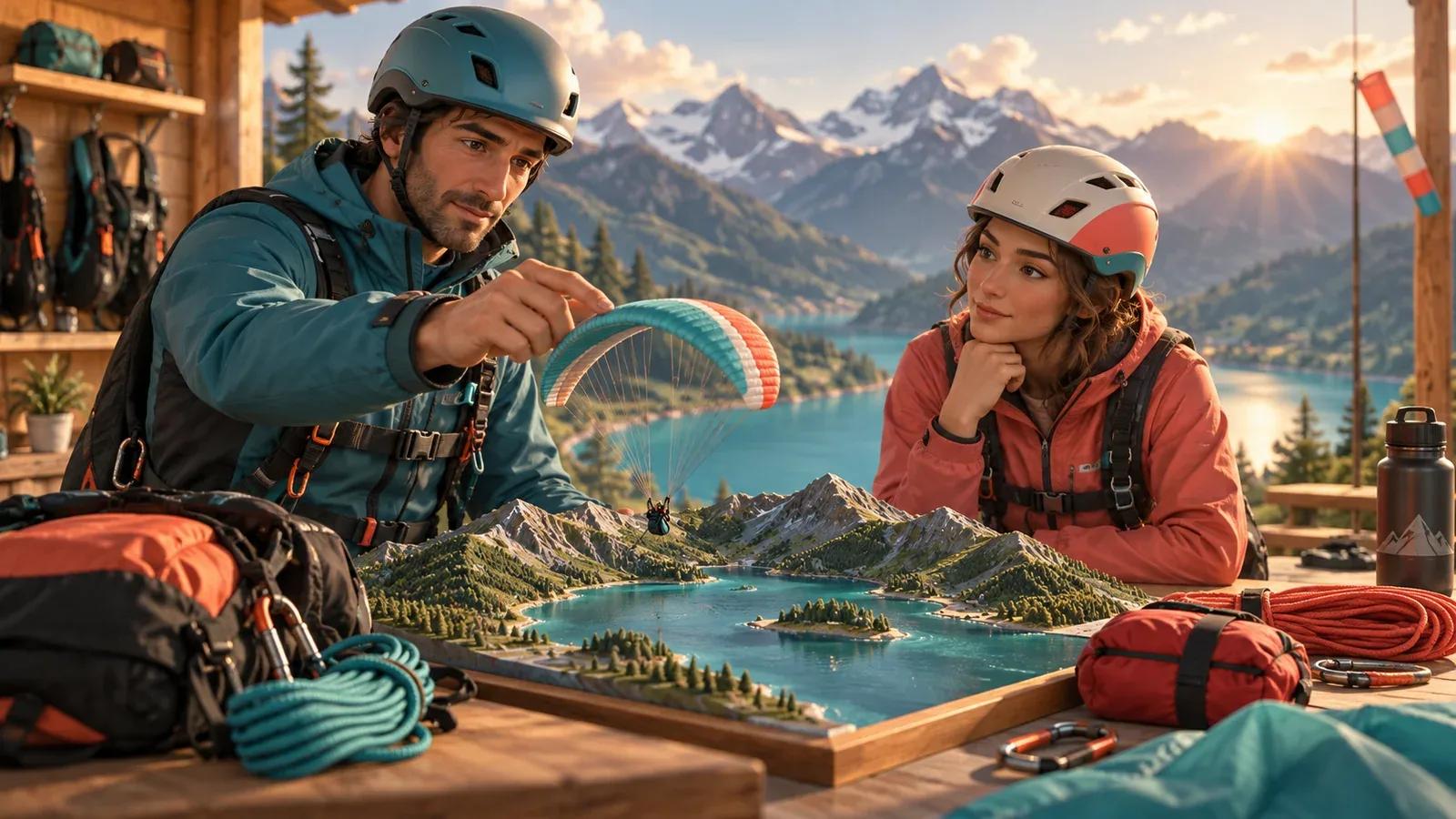
Stall and Spin Recovery (Advanced) This is the most critical stage, where pilots learn to handle the wing when it stops flying (stalls). Full Stall: Completely stopping the wing and performing a controlled recovery. Spin (Negative): Recovering from a situation where one side of the wing stalls. Search for Backfly: Finding the "sweet spot" of the wing in a stall to stabilize it before release.
Xacademy
Guide
Xacademy
Frequently asked questions
What pilot level is required for SIV?
SIV is recommended for P2 and above. Introductory SIV is suitable for P2–P3 pilots, Intermediate for P3–P4, and Advanced SIV (Full Stall) for P4–P5 pilots. A minimum of 30–50 independent flights is recommended before attending.
Why is SIV conducted over water?
Flying over water minimizes risk. If something goes wrong during a maneuver — a reserve deployment or loss of wing control — a water landing is far safer than landing on terrain. A dedicated rescue boat accompanies every pilot throughout the session.
How many days does an SIV course last?
A typical SIV course lasts 3–5 days, though this depends on weather and the level chosen. During one day, you typically complete 3–5 flights. Video debriefing after each flight is an essential part of the learning process.
Do I need my own equipment for SIV?
Yes, using your own wing and harness is recommended for SIV since it is important to learn incident management on the equipment you normally fly. A reserve parachute, helmet, and flotation device (life vest) are mandatory. Rental is available if you do not have your own gear.
Is SIV dangerous?
SIV is specifically designed to minimize risk. Flying over water, constant rescue team standby, radio contact with the instructor, and progressive difficulty (from simple to complex maneuvers) all make SIV one of the most controlled training environments in paragliding.
Will I actually deploy a reserve parachute during SIV?
Reserve deployment practice is one of the most valuable components of SIV. At the introductory level, this is done under controlled conditions. At intermediate and advanced levels, it happens within realistic scenarios. This experience is invaluable because in an emergency, deploying your reserve must be an automatic reflex.
What is video debriefing and why is it important?
Every SIV flight is recorded on video from the ground or boat. After each flight, the instructor reviews each maneuver with the pilot — what was done correctly, where mistakes were made, and how to improve. This effectively doubles the learning — you see things you cannot notice while flying.
Can I combine SIV with other courses?
Yes, many pilots combine SIV with XC training or thermal courses. This is an effective combination — you learn to manage incidents in SIV, then apply that knowledge in real XC and thermal flying. Xacademy offers combined packages.
Keep learning
Explore the courses in this area or browse all Academy categories.