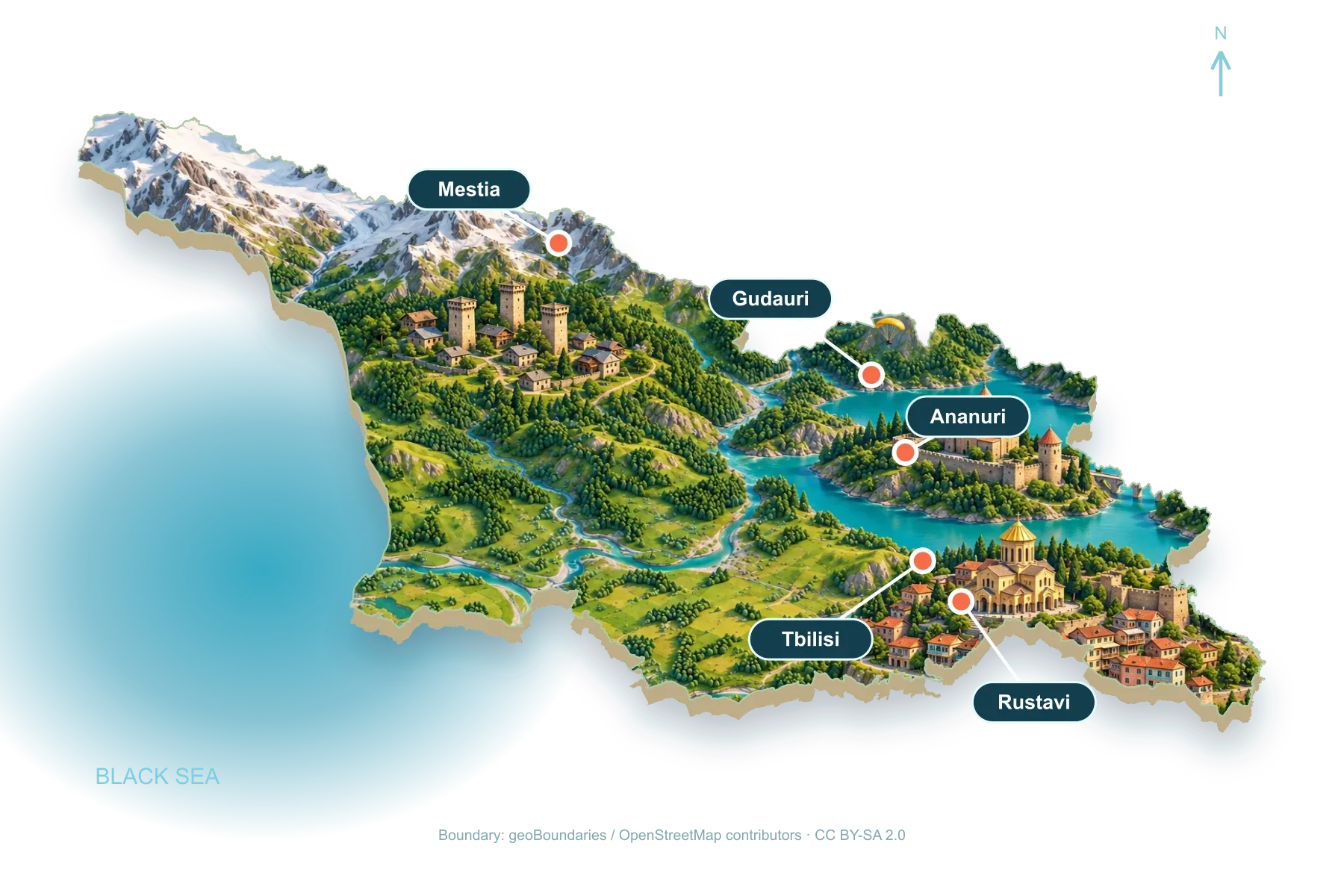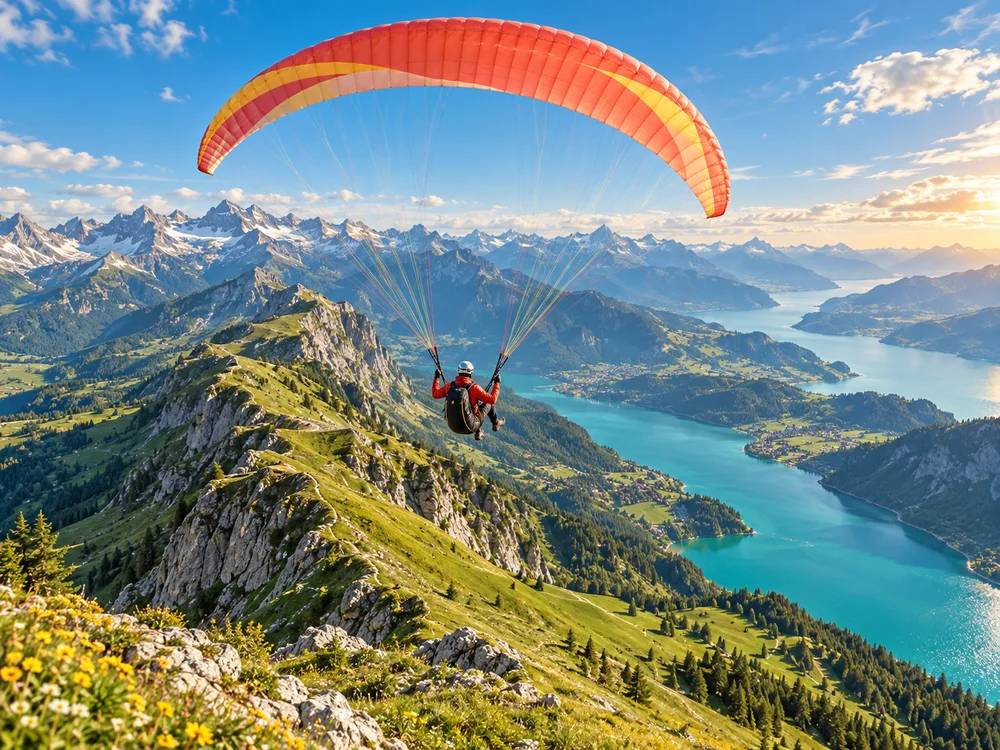
Gudauri, Tbilisi, or Mestia? Find the best prices and unforgettable views all on one platform.


active destination
rated launch sites
verified partners
certified crew
training programs
average score
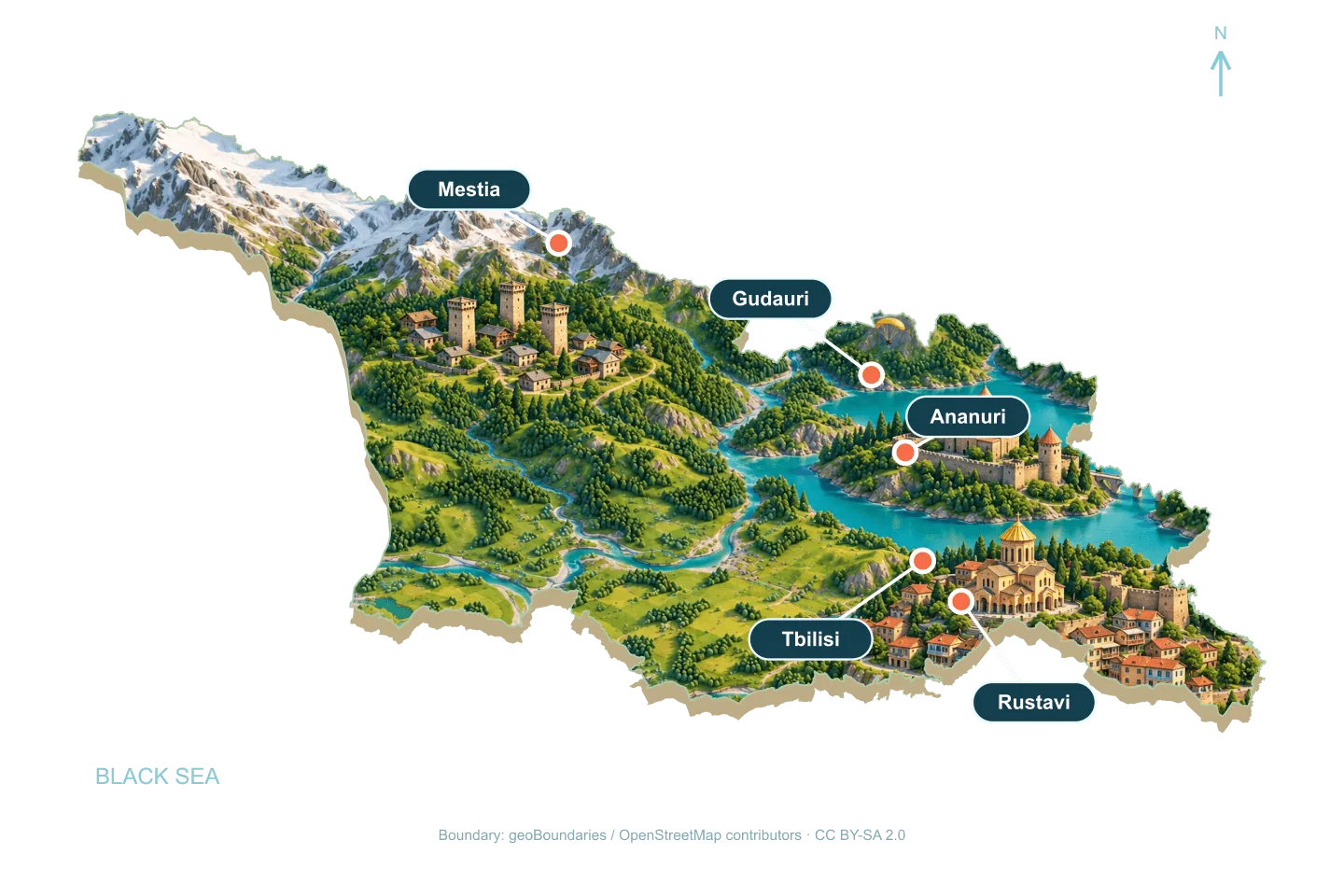
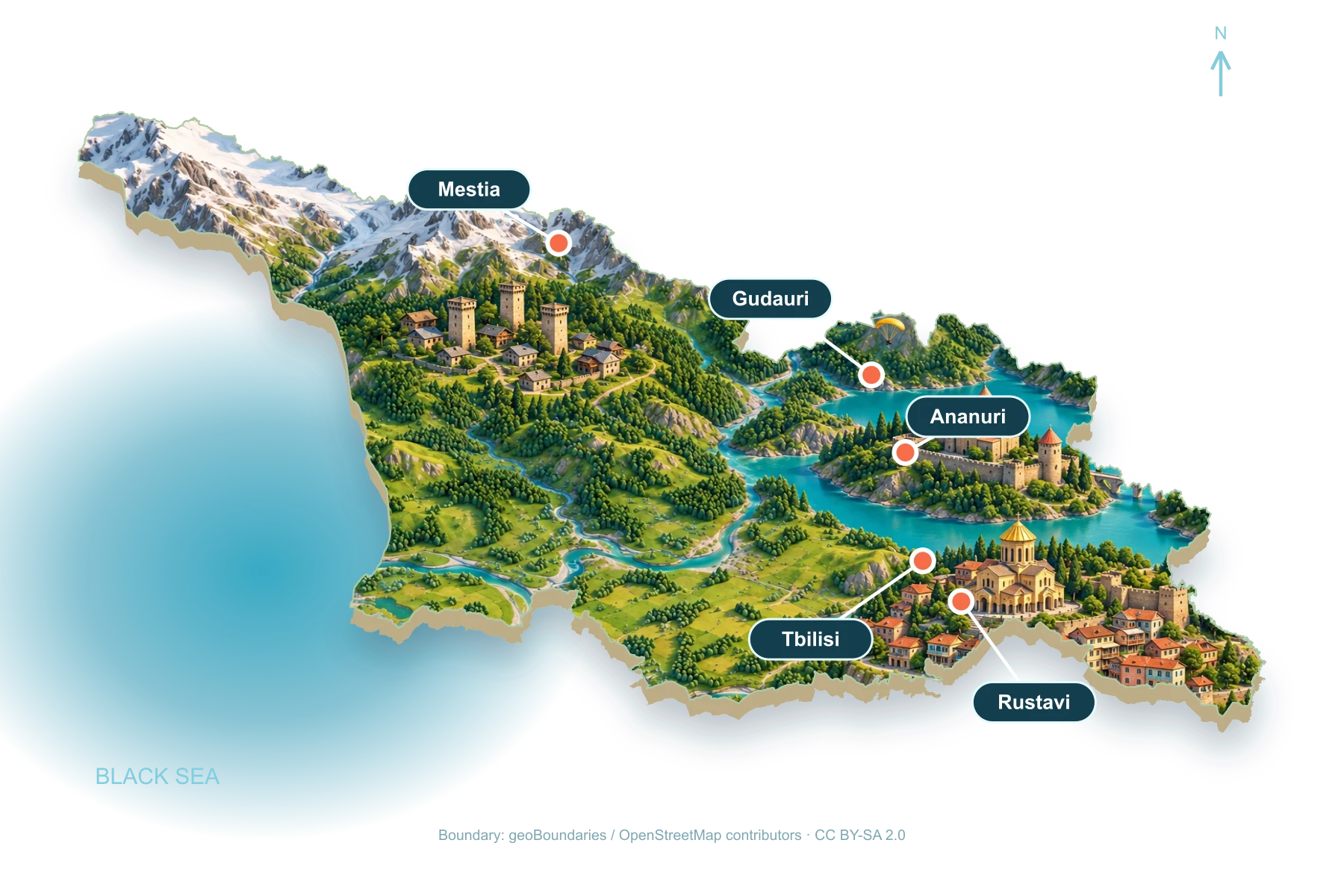
xparagliding.com — the most convenient platform for paragliding in Georgia. Discover top flying locations, compare prices, meet certified pilots and companies. Book your tandem flight online in Gudauri, Tbilisi, Rustavi, Mestia and Ananuri. Safe flights available year-round with experienced instructors.
Discover the best locations for paragliding in Georgia. Compare prices, seasons, and local conditions.

BeginnerP1 – Beginner This is the introductory stage where the student learns the basics and takes their first steps. What it includes: Equipment familiarization, ground handling (kiting), launching from low-incline slopes, and straight-line flights. Goal: For the pilot to understand how the wing responds to control toggles. At this stage, flights are very short and at low altitudes.
BeginnerFoundational Manuvers (Introductory) Focuses on wing control and basic collapses. It builds the pilot’s confidence in handling common turbulence. Pitch & Roll Control: Mastering the rhythmic movements of the wing. Big Ears: Learning a controlled rapid descent technique. Asymmetric Collapses: Simulating a 50% side collapse and maintaining direction. Frontal (Symmetric) Collapses: Recovering from a full leading-edge collapse.
BeginnerThis course is designed for those who wish to fly long distances (Cross-Country - XC) and participate in competitions. Key Stages: Thermal Flying: Learning how to locate rising air currents, how to "center" within them, and how to reach maximum altitude effectively. Route Planning: In-depth study of meteorology — reading clouds, calculating wind drift, and constantly searching for "escape" options. Using the Accelerator: Learning how to fly fast and safely in turbulent air using the accelerator (Speed Bar). XC Flights: Completing your first 20, 50, or 100 km routes under the guidance of an instructor (via radio communication).
BeginnerThis course is designed for experienced pilots who wish to perform non-commercial flights (such as flying with friends or family members). Prerequisites: A minimum of a P4 (Advanced) level license and flight hours (typically 100-200 hours). Training Focus: Specifics of tandem paragliding equipment. Passenger communication and pre-flight briefing. Launch and landing techniques under dual-load (increased weight) conditions. Restriction: The pilot is not authorized to accept monetary compensation for flights.
Progress cours P2 – Novice This is the most critical training phase. Upon completing this level, the pilot is cleared to fly independently at "simple" sites. What it includes: Various launch techniques (forward and reverse launches), in-flight turns, flight path approaches, and landing at a pre-designated target. Theory: Basics of meteorology, flight priorities (right-of-way rules), and safety protocols.e at P2 level — thermal and dynamic soaring techniques, XC flight fundamentals and maneuvering
BeginnerCommercial Tandem Pilot Training Course This is a professional-level certification that authorizes the pilot to operate within the tourism sector and conduct paid commercial flights. Prerequisites: Solo P4 level certificate or an equivalent sports license. Completion of an SIV course (Simulation of flight incidents and extreme maneuver management). A valid First Aid certificate. Course Content: Psychology: Techniques for managing "fearful" or anxious passengers. Risk Management: Critical decision-making in challenging meteorological conditions. Business Ethics and Law: Insurance protocols, certification standards, and professional liability. Examination: The final assessment consists of both a theoretical test and a practical exam (check-rides conducted with an instructor).
BeginnerDynamic Manuvers (Intermediate) is Introduces high-energy maneuvers and more aggressive descent methods. Spiral Dives: Learning to manage high G-force descents. B-Stall: A stable, vertical descent technique by pulling the B-risers. Wingovers: Mastering energy management through coordinated turns. Rapid Exit from Spirals: Ensuring a safe transition back to level flight.
BeginnerAcro paragliding is the "high aerobatics" of flight. It is the most spectacular and, at the same time, the most high-risk discipline in the sport. Entry into Acro courses is permitted only after the pilot has achieved flawless mastery of SIV course skills. Training Stages (By Maneuvers): A) Intro to Acro: Wingover: The "alphabet" of Acro. Swinging the wing from side to side at an angle of more than 90 degrees. This stage teaches energy management. Spiral Dive: A controlled rapid descent with high G-force loading. Asymmetric Spiral: A spiral where the wing "dives" on every rotation. B) Intermediate Maneuvers: SAT: One of the most famous Acro maneuvers, where the pilot and the wing rotate around different centers (the wing moves forward, while the pilot moves backward). Full Stall: Completely stalling the wing in mid-air and performing a controlled "recovery." Deep Stall / Parachutal: Maintaining the wing in a vertical descent mode. C) Advanced Acro: Helicopter: The wing rotates around its vertical axis like a helicopter propeller. Tumble / Looping: Rotating the wing vertically over and under the pilot (vertical flip). Misty Flip / McTwist: Dynamic maneuvers that require reactions within fractions of a second. 3. Safety in Acro Courses Acro training is never conducted over land. Over Water: All Acro practice is performed over a lake or the sea. Safety Boat: A rescue boat is constantly on standby on the water to recover the pilot. Equipment: Acro pilots use specialized "Acro Harnesses" equipped with two reserve parachutes. Automatic Life Jacket: The pilot wears an inflatable vest that activates upon contact with water. 4. Required Documentation and Prerequisites License: Minimum P4 or P5 level. SIV Certificate: Entry is strictly prohibited unless the pilot has completed at least 2-3 full SIV clinics. Insurance: Specialized sports insurance that specifically covers acrobatic flying.
BeginnerAt this level, the pilot is experienced and begins flying in more challenging conditions. What it includes: Finding and "coring" thermals (warm air currents) to gain altitude, and flying in moderate turbulence. Requirements: Typically requires a minimum of 30 to 60 independent flights at various locations.
BeginnerStall and Spin Recovery (Advanced) This is the most critical stage, where pilots learn to handle the wing when it stops flying (stalls). Full Stall: Completely stopping the wing and performing a controlled recovery. Spin (Negative): Recovering from a situation where one side of the wing stalls. Search for Backfly: Finding the "sweet spot" of the wing in a stall to stabilize it before release.
BeginnerP4 – Advanced This represents a high-level pilot capable of flying in complex terrain and diverse conditions. What it includes: XC (Cross-Country) flights—covering long distances from one point to another—and in-depth analysis of complex meteorological forecasts. Requirements: A minimum of 250 flights and significant airtime (often 100+hours).
BeginnerP5 – Master This level is awarded to pilots with years of experience and exceptional skills. What it includes: Expert knowledge in all types of launches, flight techniques, and safety procedures. This level is often a prerequisite for those aspiring to become instructors. Goal: To serve as a role model and mentor for other pilots.
Choose your preferred company, read genuine reviews, and book your flight easily.
Book flights directly with our certified pilots.