

Wilderness First Aid (WFA) — Theory Test
18 questions4 errors allowed
International first aid courses for paragliding are primarily known as First Aid for Paragliding Pilots or Wilderness First Aid (WFA). Since flying often occurs in remote, hard-to-reach mountainous areas, standard urban first aid protocols are insufficient. Below are the key standards and requirements for pilots and instructors: 1. Course Titles and Standards International Designation: First Aid & CPR Certification (often specialized as Outdoor/Wilderness First Aid). Standards: Primarily based on guidelines from the Red Cross, AHA (American Heart Association), or ERC (European Resuscitation Council). Paragliding Specifics: The course must focus heavily on traumatology, as approximately 90% of paragliding incidents involve mechanical injuries. 2. Pilot's Competencies A pilot must master the "life-saving minimum": ABC (Airway, Breathing, Circulation): Clearing airways and checking for vital signs. Spinal and Cervical Immobilization: This is the most critical skill. After a hard impact, a passenger or pilot must not be moved without proper neck and spine stabilization. Management of Open and Closed Fractures: Application of improvised or specialized splints. Shock Management: Recognition and prevention of traumatic shock. Hemorrhage Control: Proper use of tourniquets and pressure bandages. Equipment Extrication: Knowing how to safely remove a helmet or harness without exacerbating existing injuries. 3. Instructor's Guidelines An instructor bears double responsibility—managing the emergency scene and ensuring the safety of the entire group. Emergency Action Plan (EAP): For every flight location, the instructor must have a written plan including the nearest hospital, helicopter rescue protocols, and exact GPS coordinates. Communication Standards: Ensuring the functionality of radio and satellite communication devices. Medical Kit (Med-Kit): Instructors must always carry a fully equipped first aid kit tailored for high-altitude and mountain environments. Triage: In the event of multiple casualties, the instructor must be able to prioritize victims based on the severity of their condition. 4. Specific Paragliding Protocols Scene Safety: Before approaching a casualty, ensure the scene is safe (e.g., check that no other pilots are landing nearby or that a wing caught in a tree won't collapse onto the site). GPS Coordinate Transmission: Providing exact coordinates to search and rescue (SAR) teams. Managing Hypothermia: In the mountains, an injured person loses body temperature rapidly. Preventing hypothermia is essential, as it significantly worsens traumatic outcomes. Summary It is mandatory for instructors to hold a Valid First Aid Certificate, which must be renewed every two years. For pilots, it is highly recommended to undergo at least a one-day intensive training session before the start of each flying season.
6 modules 19 lessons Estimated lesson time: 10 h
+1 module
View Full Syllabus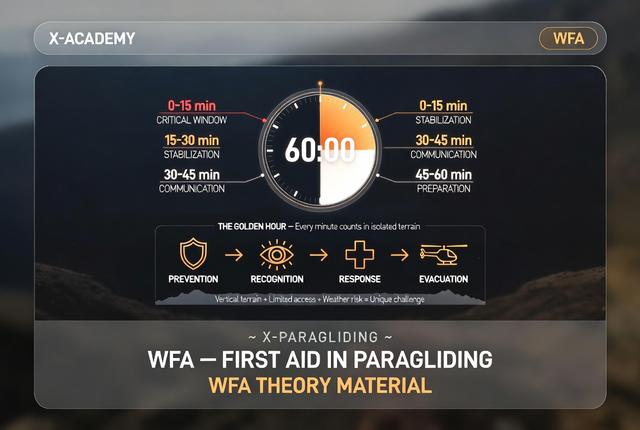 01
01The Advanced Instructor Guidelines for Management & Leadership in a crisis are what distinguish a "knowledgeable individual" from a true leader. When an incident occurs, the instructor automatically becomes the Incident Commander. At this moment, their primary tool is not a bandage, but organizational structure.
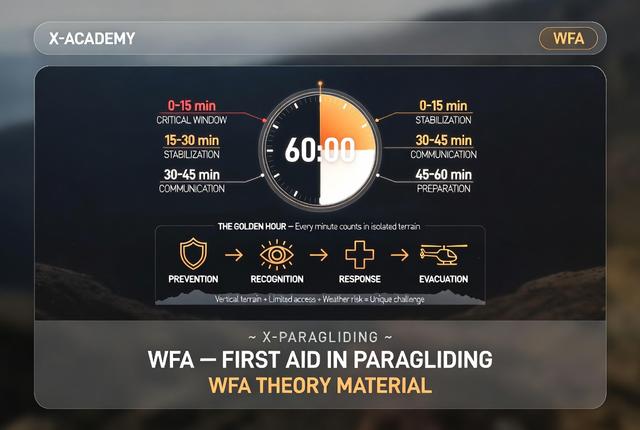 02
02First aid in paragliding is not merely medical knowledge; it is the art of extreme survival, where decision-making occurs in isolated environments with limited resources and under high psychological pressure.
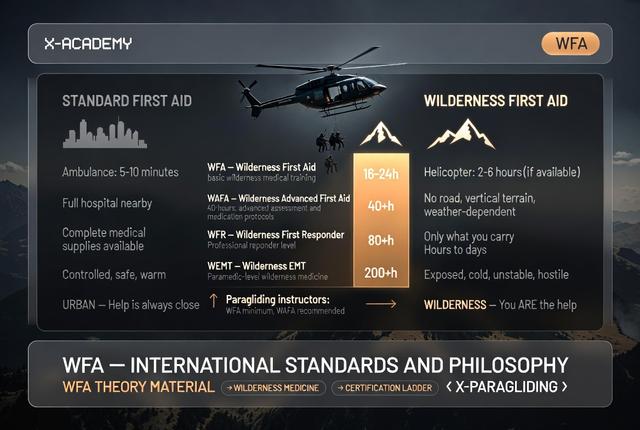 03
03The International Standards and Philosophy of First Aid in paragliding represent the fundamental shift from standard medical training to Wilderness Medicine. When an incident occurs in the mountains, a ravine, or a forested area, the pilot enters an "autonomous mode" where the only chance of survival is their knowledge and a cool head.
 04
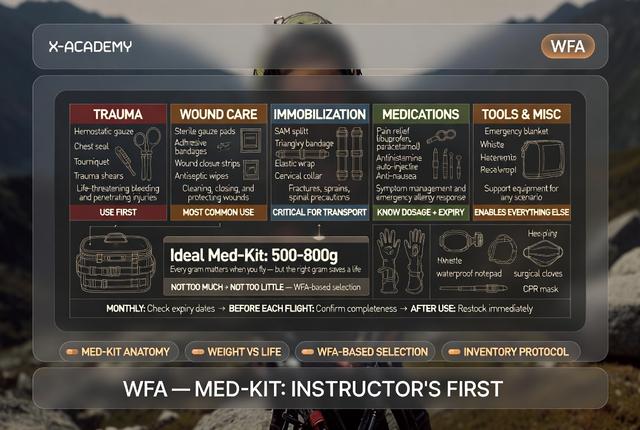
04The Instructor's Medical Kit (Med-Kit) is not a standard household first aid kit. In paragliding, its composition is based on Wilderness First Aid (WFA) standards, where the focus is on managing critical trauma and ensuring autonomous survival.
 05
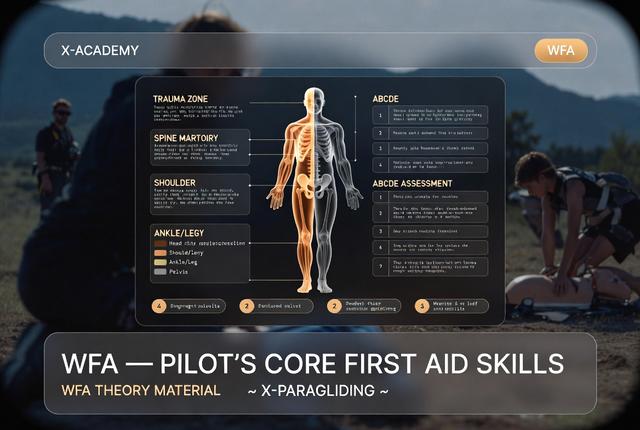
05This module of critical competencies for pilots is the foundation of safety. In paragliding, where medical assistance may be delayed, the pilot serves as the first responding officer.
 06
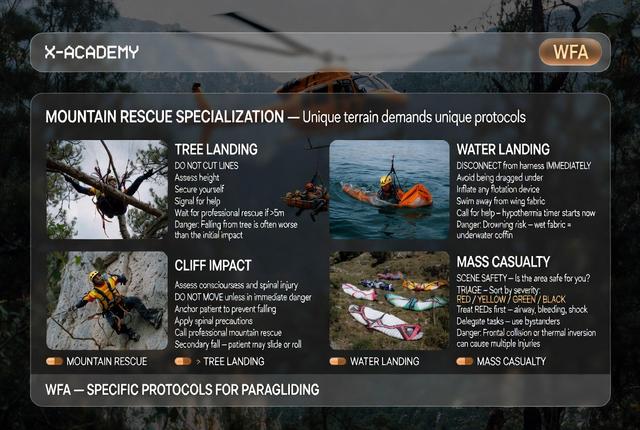
06Specific paragliding protocols are a narrow specialization that distinguishes a mountain rescuer from an ordinary paramedic. In this field, medical knowledge must be combined with an understanding of the aviation environment, aerodynamics, and the operational principles of rescue aircraft.
 07
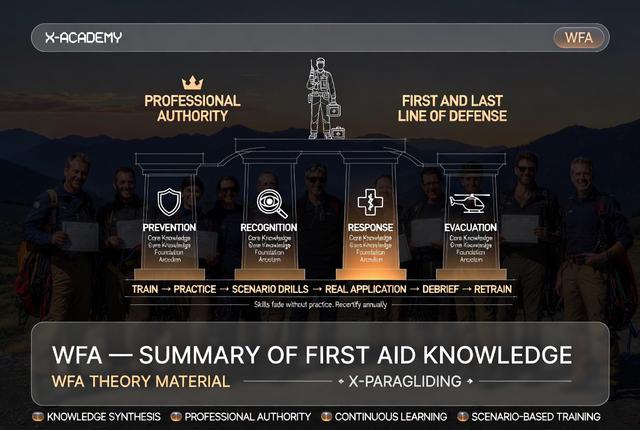
07The summary of first aid knowledge for a paragliding instructor is not a mere formality—it is the cornerstone of their professional authority, ethics, and the responsibility they hold toward their students. In aviation culture, safety is measured not only by flight technique but also by how one manages a crisis when things do not go according to plan.
The First Aid course is open to everyone — no specific flying license required. It is designed for pilots and anyone working in the air sports environment.
Upon successful completion you receive a Wilderness First Aid (WFA) certificate recognized by international paragliding organizations. The certificate is valid for 2 years.
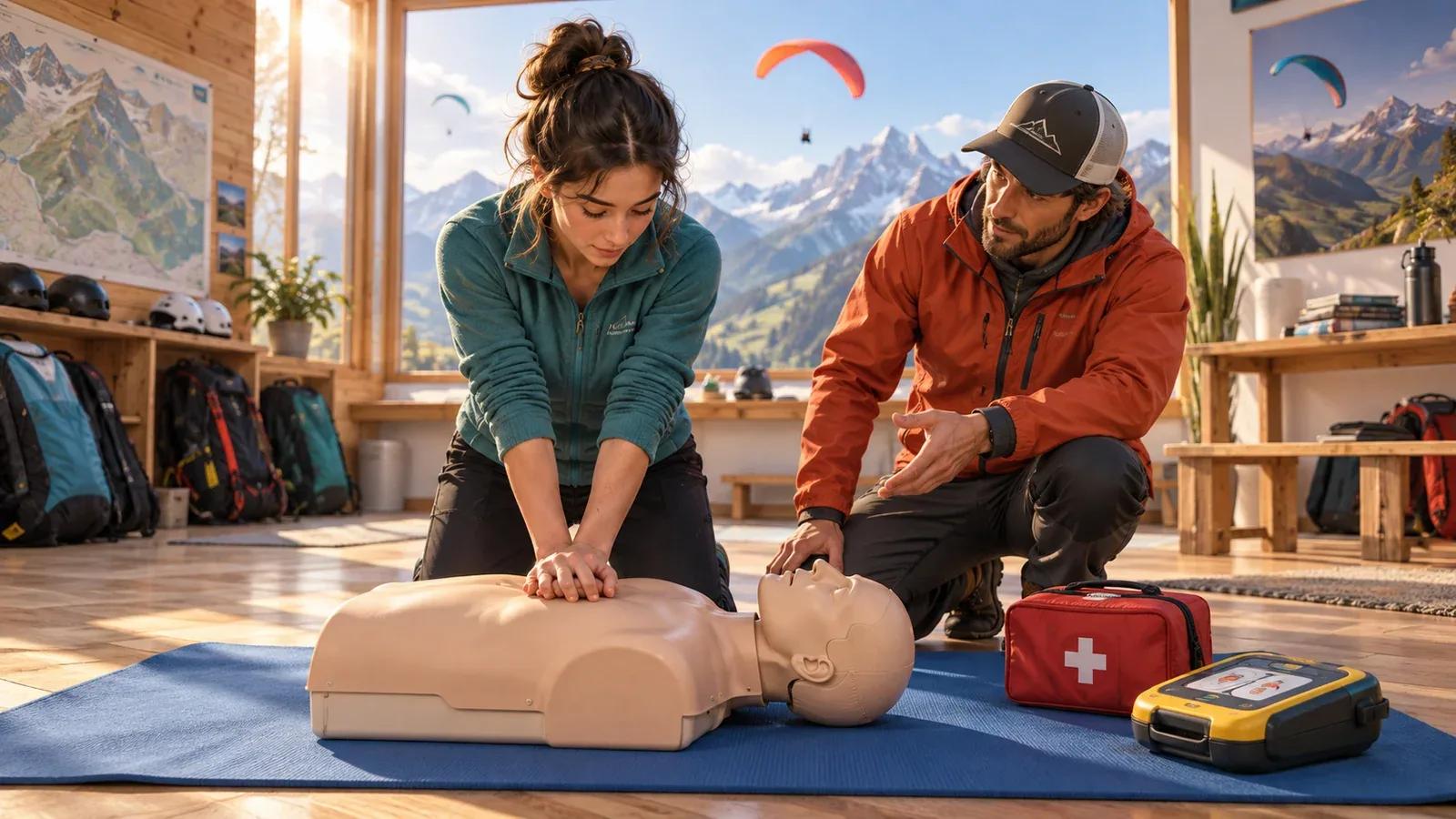
Practical sessions include: CPR/AED simulation, trauma splinting, bleeding control, immobilization techniques, evacuation drills, and realistic emergency scenarios (tree hang, water landing).