Theory Materials
First Aid in Paragliding: Standards and Protocols — 7 materials · 31 min read
(WFA) Advanced Instructor Guidelines (Management & Leadership)
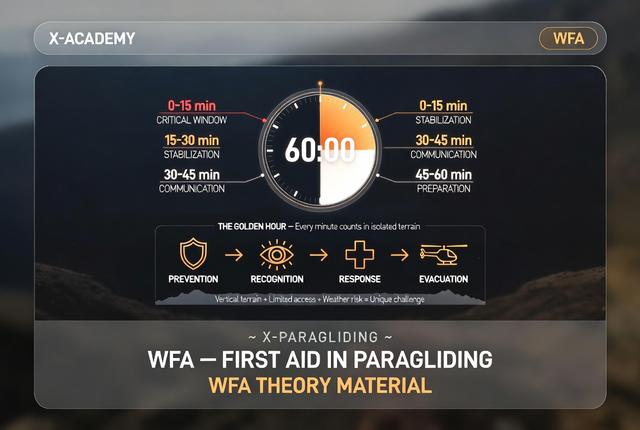
The Advanced Instructor Guidelines for Management & Leadership in a crisis are what distinguish a "knowledgeable individual" from a true leader. When an incident occurs, the instructor automatically becomes the Incident Commander. At this moment, their primary tool is not a bandage, but organizational structure.
(WFA) General Purpose of First Aid in Paragliding
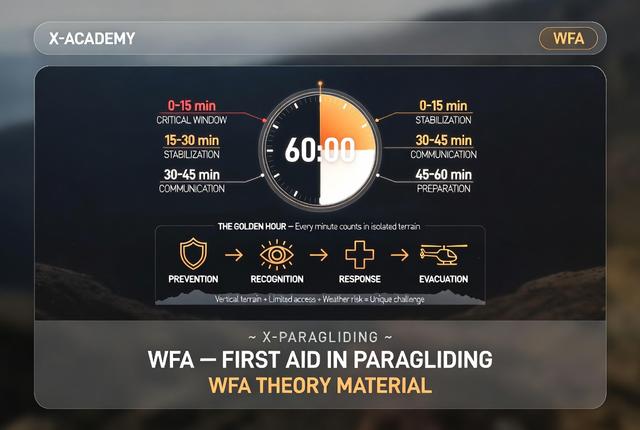
First aid in paragliding is not merely medical knowledge; it is the art of extreme survival, where decision-making occurs in isolated environments with limited resources and under high psychological pressure.
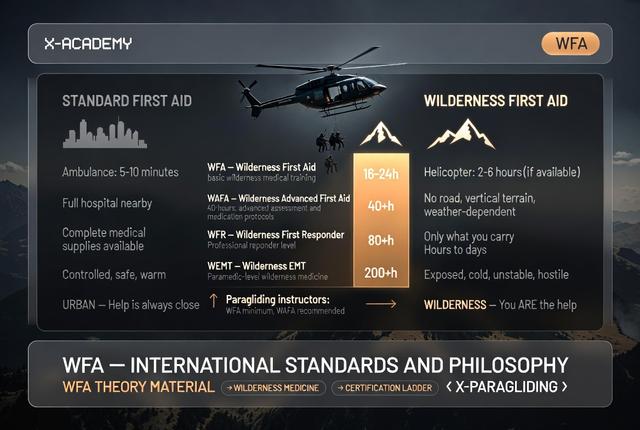
(WFA) International Standards and Philosophy of the Course
The International Standards and Philosophy of First Aid in paragliding represent the fundamental shift from standard medical training to Wilderness Medicine. When an incident occurs in the mountains, a ravine, or a forested area, the pilot enters an "autonomous mode" where the only chance of survival is their knowledge and a cool head.
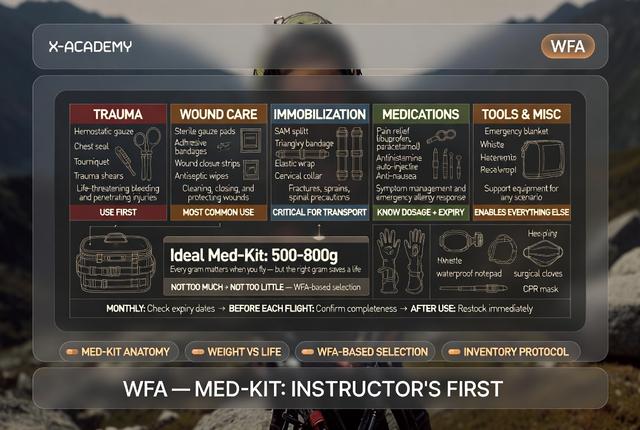
(WFA) Med-Kit: Instructor’s First Aid Standard
The Instructor's Medical Kit (Med-Kit) is not a standard household first aid kit. In paragliding, its composition is based on Wilderness First Aid (WFA) standards, where the focus is on managing critical trauma and ensuring autonomous survival.
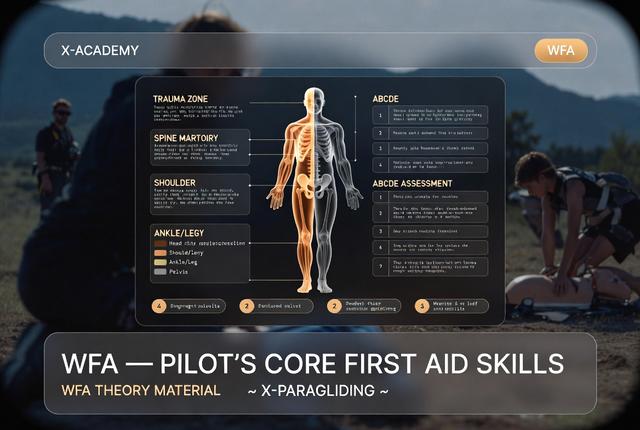
(WFA) Pilot's Core Skills
This module of critical competencies for pilots is the foundation of safety. In paragliding, where medical assistance may be delayed, the pilot serves as the first responding officer.
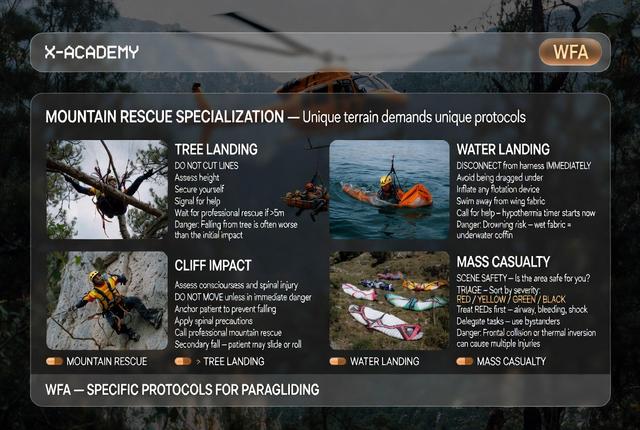
(WFA) Specific Protocols for Paragliding
Specific paragliding protocols are a narrow specialization that distinguishes a mountain rescuer from an ordinary paramedic. In this field, medical knowledge must be combined with an understanding of the aviation environment, aerodynamics, and the operational principles of rescue aircraft.
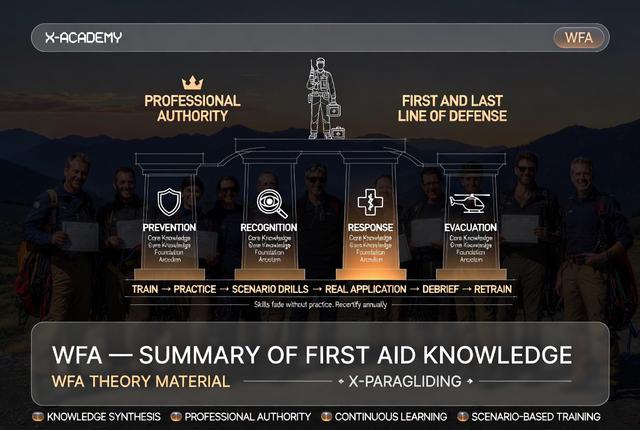
(WFA) The summary of first aid knowledge
The summary of first aid knowledge for a paragliding instructor is not a mere formality—it is the cornerstone of their professional authority, ethics, and the responsibility they hold toward their students. In aviation culture, safety is measured not only by flight technique but also by how one manages a crisis when things do not go according to plan.