

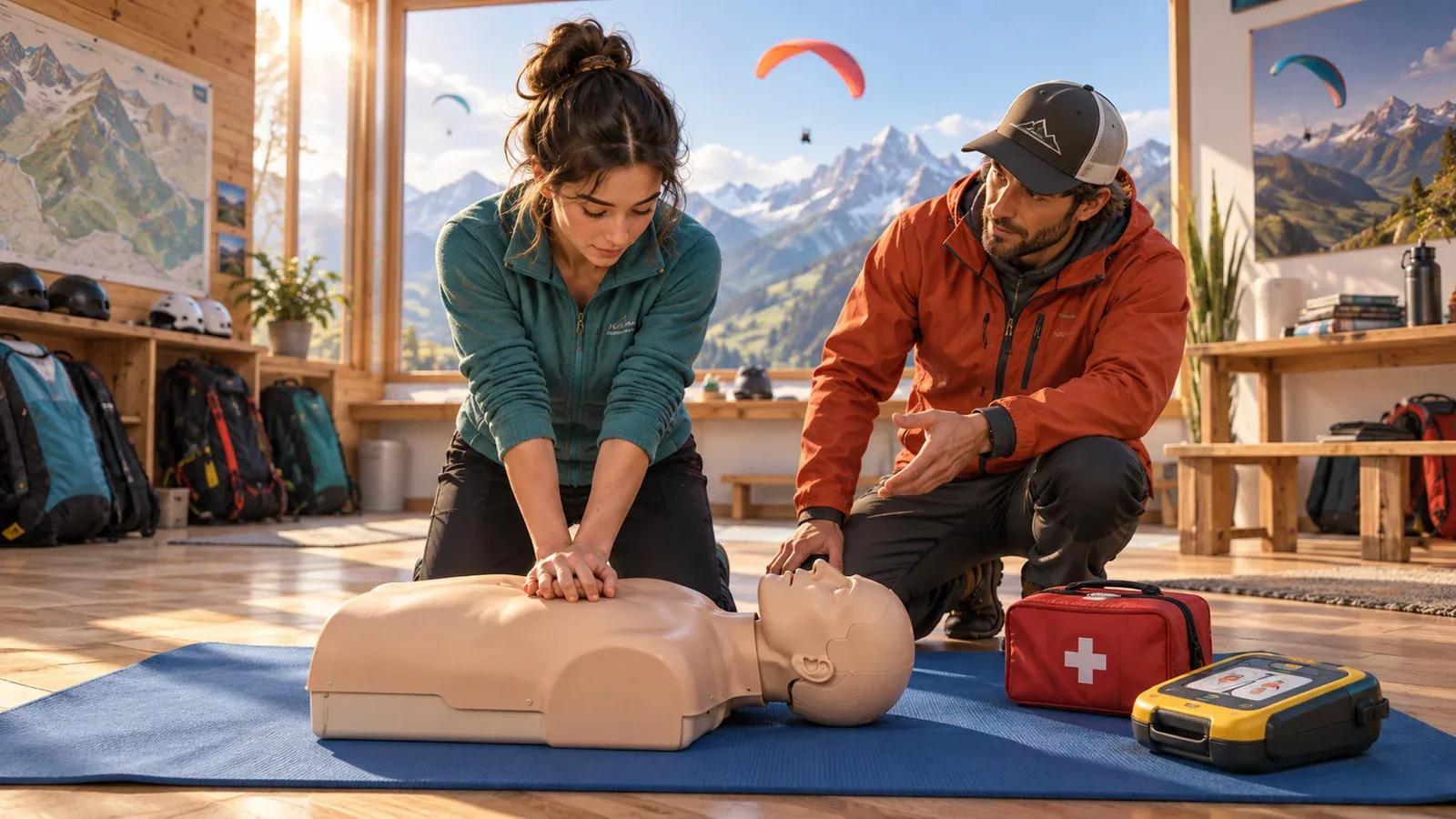
First aid course tailored for paragliding pilots. Covers trauma management, spinal immobilization, CPR/AED, and evacuation principles in mountainous areas.
Xacademy
First Aid Courses for Pilots
First aid course tailored for paragliding pilots. Covers trauma management, spinal immobilization, CPR/AED, and evacuation principles in mountainous areas.
1 courseExplore courses
Xacademy
Courses
Choose a course and explore its learning program.
Xacademy
Guide
Xacademy
Frequently asked questions
Is the first aid course mandatory?
For professional tandem pilots and instructors, a first aid certificate is mandatory per APPI requirements. For solo pilots, the course is strongly recommended, especially for those flying in mountainous areas.
How long is the first aid course?
The course typically takes 2 days (16 hours total). Day one covers theory and CPR/AED practice, day two focuses on trauma management, spinal immobilization, and evacuation exercises.
What is the ABCDE protocol?
ABCDE is an international trauma assessment protocol: A — Airway, B — Breathing, C — Circulation, D — Disability (neurological status), E — Exposure (full body examination). This sequence ensures no critical aspect is missed.
Will I learn to use an AED?
Yes, the course includes full practical training on AED (Automated External Defibrillator) use. You will learn device activation, electrode placement, and following vocal instructions. AEDs are increasingly available at airfields and flying sites.
How do I handle spinal injuries?
The course teaches recognition of spinal injury signs, cervical collar application, patient stabilization without movement, and immobilization with improvised materials. The golden rule — never move the patient until spinal injury is ruled out.
How long is the certificate valid?
The first aid certificate is valid for 2 years. After expiration, a refresher course is required, typically lasting 1 day and covering updated protocols and practical review.
Can I use this knowledge outside of paragliding?
Absolutely. CPR, trauma management, bleeding control, and the ABCDE protocol are universal skills applicable in any situation — at home, on the street, or at work.
What first aid kit should I carry when flying?
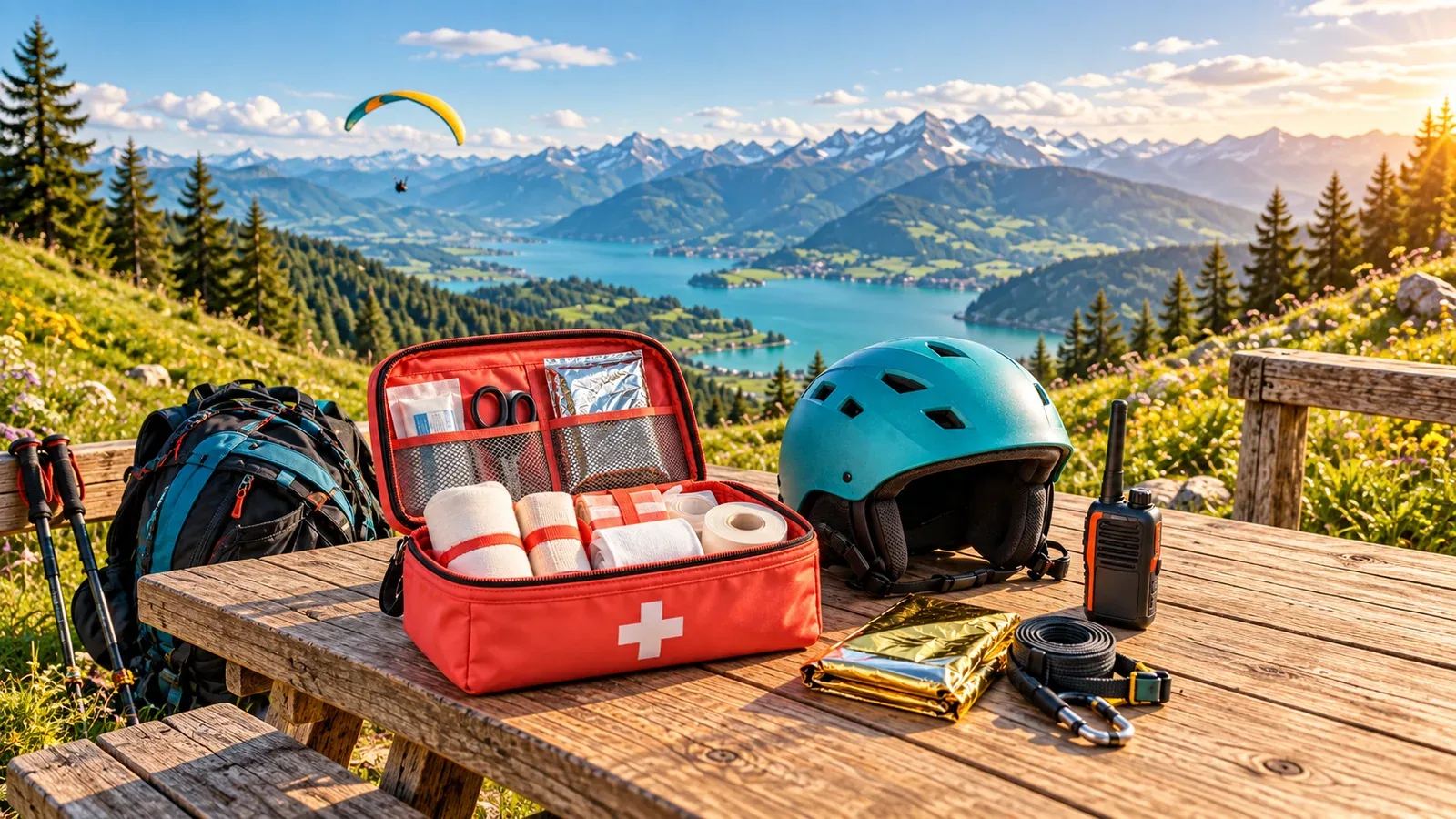
A minimum kit includes: sterile bandages, tourniquet, elastic wrap, antiseptic, steri-strips, SAM splint, improvised cervical collar, gloves, and a CPR mask. Each item is discussed in detail during the course.
Keep learning
Explore the courses in this area or browse all Academy categories.