
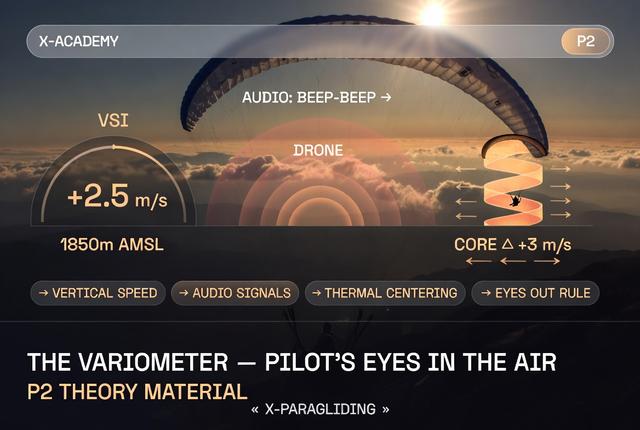
P2 - In paragliding, a variometer (or simply "Vario")
In paragliding, a variometer (or simply "Vario") is the pilot's most essential instrument. While the radio is for safety, the variometer serves as the pilot's "eyes" in the air, helping them locate and utilize invisible upward air currents.
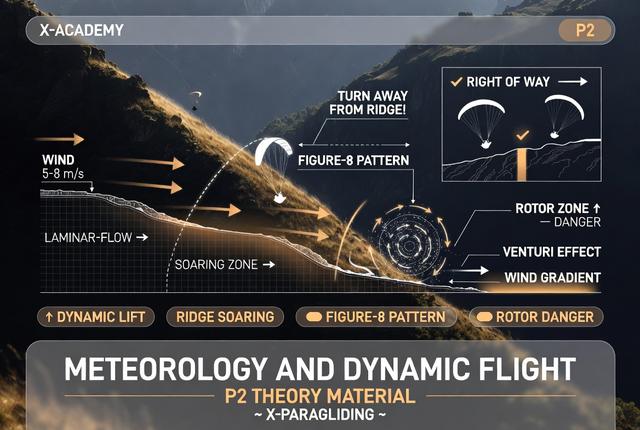
P2 - Meteorology and Dynamic Flight (Ridge Soaring)
The theoretical course on Meteorology and Dynamic Flight (Ridge Soaring) is fundamental for any pilot. It is the art of using the terrain and the wind to stay airborne for extended periods.
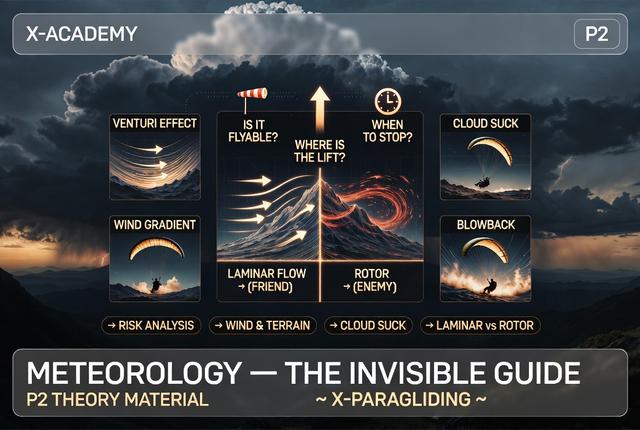
P2 - Meteorology is the "invisible guide" of paragliding
The ability to analyze weather conditions directly determines whether a flight will be a pleasant adventure or a dangerous challenge.
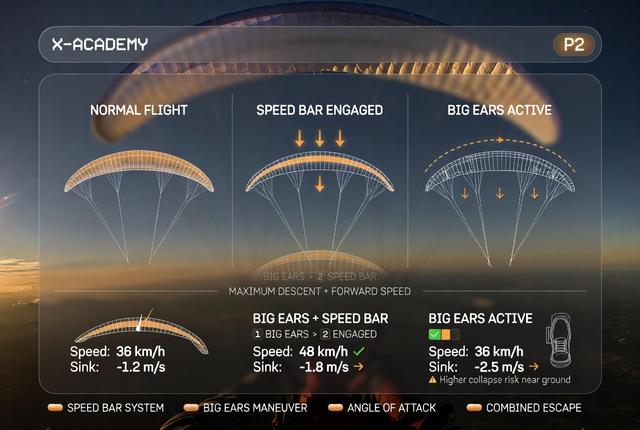
P2 - The Speed Bar (Accelerator) and Big Ears
In paragliding, the Speed Bar (Accelerator) and Big Ears are the two primary tools for changing your flight regime. Correctly using them is critical for both flight efficiency and safety in extreme situations.
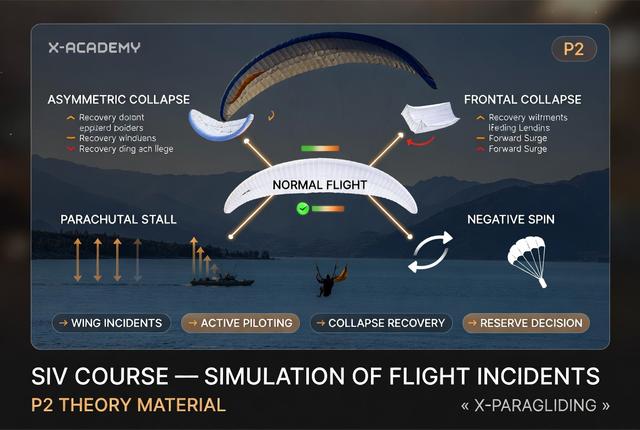
P2 - The Theoretical Importance of the SIV Course
The SIV course (Simulation d'Incidents en Vol) is a fundamental milestone in paragliding. Before advancing to the P3 (Intermediate) level, grasping the theoretical concepts of SIV is essential. At this stage, pilots begin active thermal flying, where turbulent air increases the risk of wing collapses.
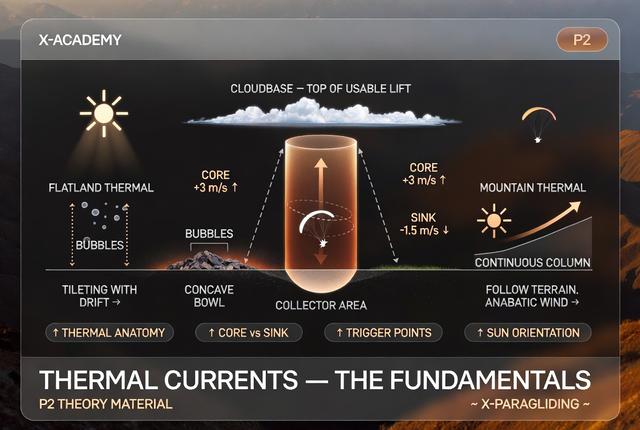
P2 - Thermal Currents — The Fundamentals
Thermal flying is considered the "Masterclass" of paragliding. It is the art of seeing the invisible and utilizing solar energy to gain altitude. This part of your theoretical course teaches pilots the "anatomy" of thermals and their behavior across different terrains.
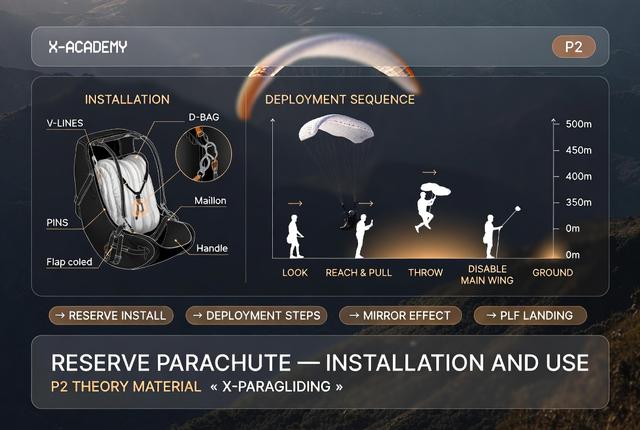
P2- Correct installation and knowledge of how to use the Reserve Parachute
Correct installation and knowledge of how to use the Reserve Parachute (often called the "Reserve" or "Rescue") are critically important. It is your last resort in cases where the main wing becomes uncontrollable.