P2 — Flight Theory Test
28 questions6 errors allowed
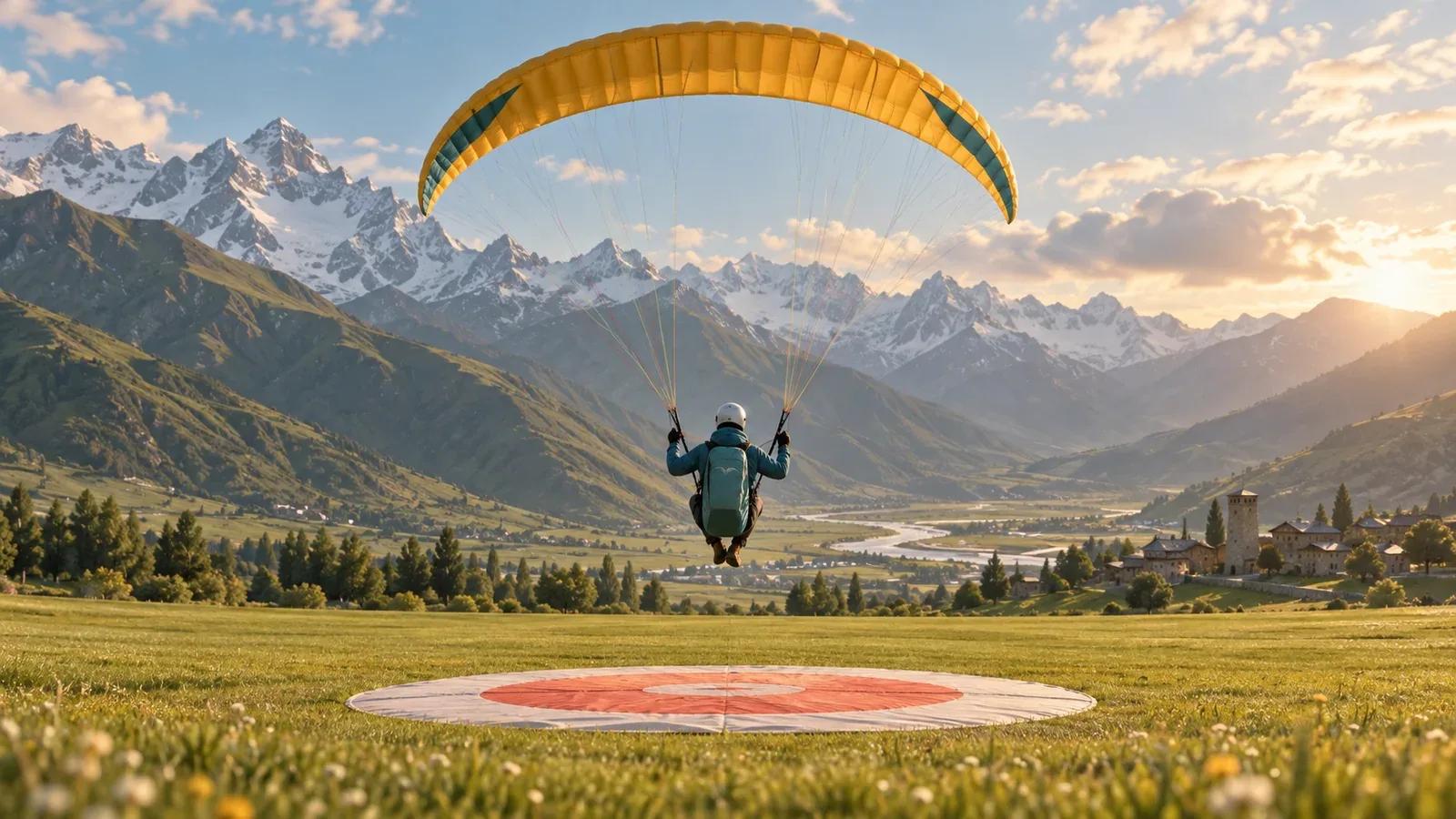
P2 – Novice This is the most important training stage. After completing this level, a pilot is allowed to fly independently at simple sites. What it includes: Different launch techniques (forward and reverse launches), turns in the air, approach planning, and landing on a predefined target. Theory: Basics of meteorology, flight priorities (right-of-way rules), and safety.
6 modules 26 lessons Estimated lesson time: 16 h 30 min
+1 module
View Full Syllabus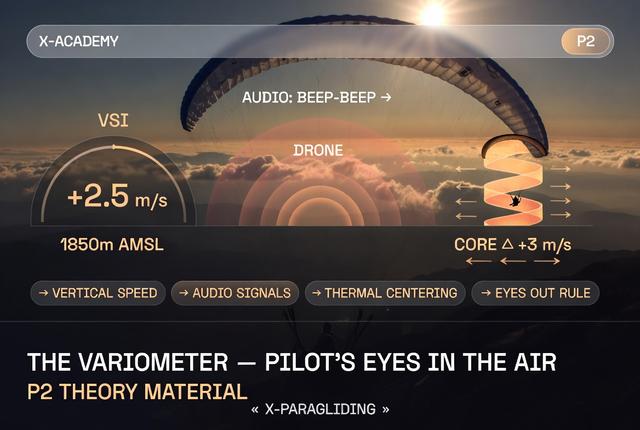 01
01In paragliding, a variometer (or simply "Vario") is the pilot's most essential instrument. While the radio is for safety, the variometer serves as the pilot's "eyes" in the air, helping them locate and utilize invisible upward air currents.
 02
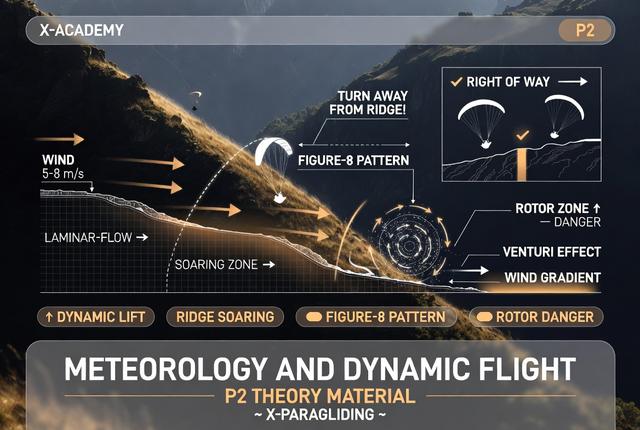
02The theoretical course on Meteorology and Dynamic Flight (Ridge Soaring) is fundamental for any pilot. It is the art of using the terrain and the wind to stay airborne for extended periods.
 03
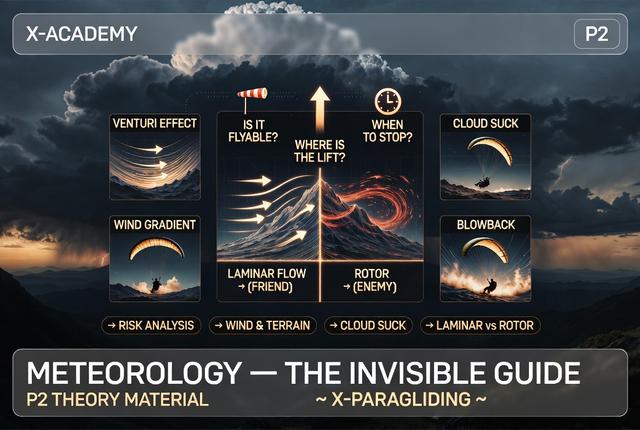
03The ability to analyze weather conditions directly determines whether a flight will be a pleasant adventure or a dangerous challenge.
 04
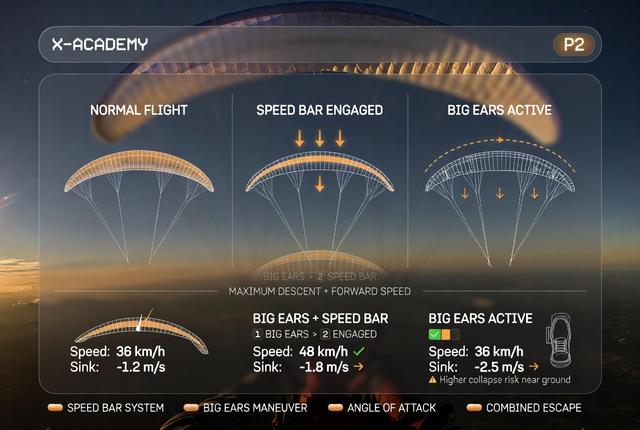
04In paragliding, the Speed Bar (Accelerator) and Big Ears are the two primary tools for changing your flight regime. Correctly using them is critical for both flight efficiency and safety in extreme situations.
 05
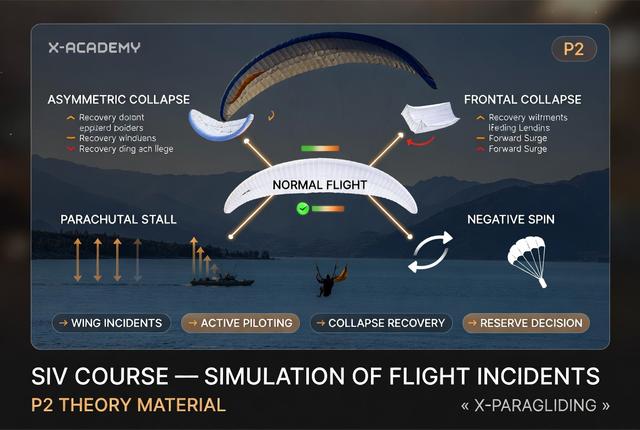
05The SIV course (Simulation d'Incidents en Vol) is a fundamental milestone in paragliding. Before advancing to the P3 (Intermediate) level, grasping the theoretical concepts of SIV is essential. At this stage, pilots begin active thermal flying, where turbulent air increases the risk of wing collapses.
 06
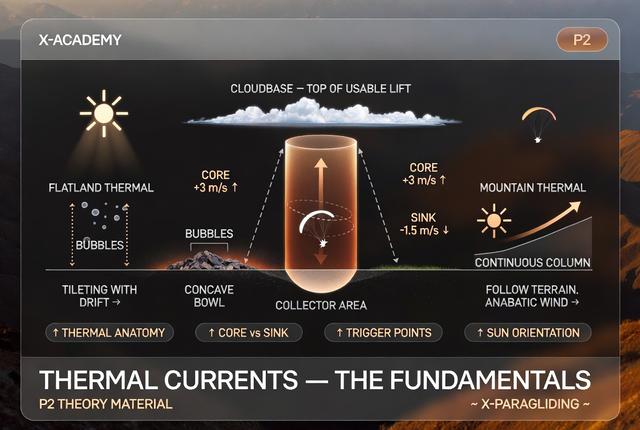
06Thermal flying is considered the "Masterclass" of paragliding. It is the art of seeing the invisible and utilizing solar energy to gain altitude. This part of your theoretical course teaches pilots the "anatomy" of thermals and their behavior across different terrains.
 07
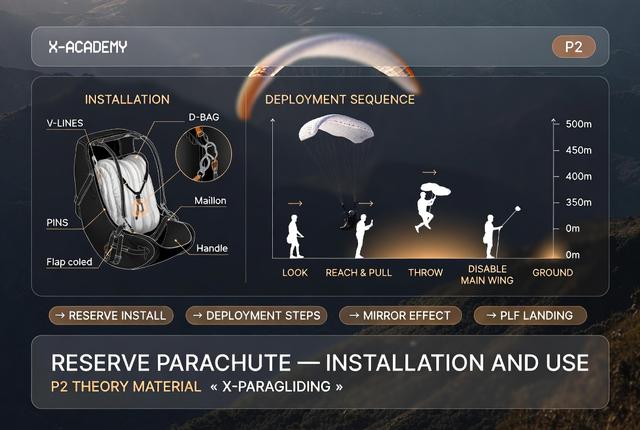
07Correct installation and knowledge of how to use the Reserve Parachute (often called the "Reserve" or "Rescue") are critically important. It is your last resort in cases where the main wing becomes uncontrollable.
P1 teaches the basics of flying — takeoff, simple maneuvering, and landing. P2 builds on this base with much more complex skills: thermal flying, XC navigation, GPS/Vario usage, advanced maneuvers (Wingovers, Spirals), and flight planning. After P2, you'll be able to perform independent 2-5 hour flights in challenging conditions.
During the 10-day course, you'll average 20-30 flights, including: 5-8 thermal flights (45 min — 3 hours), 3-5 XC attempts (1-5 hours), 5+ ground handling sessions. Total flight time is minimum 15-25 hours. Some students with lucky weather conditions may have 35+ flights!
Of course! For the P2 course, EN-A or EN-B class paragliders are accepted. The instructor will check your equipment's condition before the course starts. If you don't have your own — we offer a fleet of modern EN-B paragliders (Nova Mentor 7, Advance Epsilon 10) for rental.
Yes! We offer flexible payment options: 1) Full prepayment with 10% discount, 2) Two installments — 50% at registration, 50% on day 5, 3) Bank installments (TBC, BOG) with 0% interest for up to 3 months. Indicate your preferred method during registration.