
On this page
In paragliding, a variometer (or simply "Vario") is the pilot's most essential instrument. While the radio is for safety, the variometer serves as the pilot's "eyes" in the air, helping them locate and utilize invisible upward air currents.
1. Primary Functions of a Variometer
Modern variometers measure changes in atmospheric pressure and convert them into data the pilot can easily interpret:
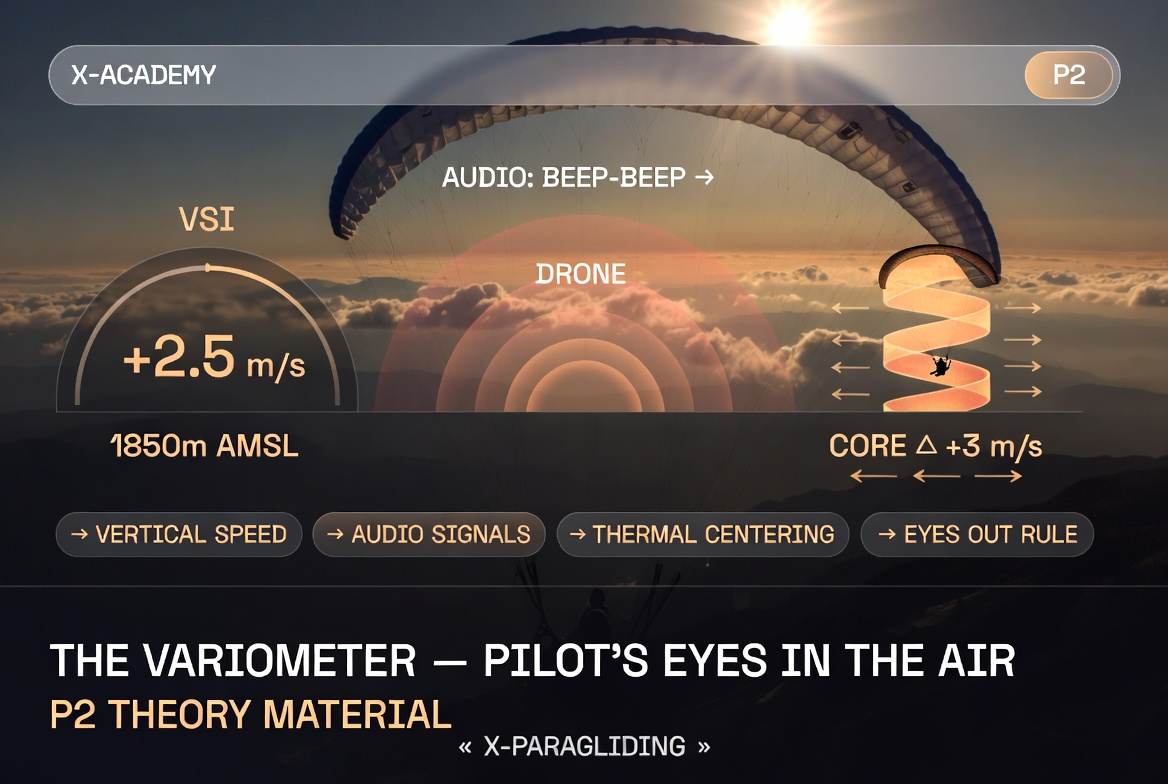
Vertical Speed Indicator (VSI): Shows how many meters per second ($m/s$) the pilot is climbing or descending.
Audio Signal (Beeping): This is the core function. When a pilot climbs, the device emits a high-pitched, pulsing sound ("beep-beep"). When descending rapidly, it emits a low, continuous "sink alarm" or drone.
Altimeter: Displays exact altitude above sea level (AMSL) or relative altitude from the takeoff point.
G-Meter and Temperature: Many advanced models provide data on G-force loads and ambient air temperature.
2. Importance of Use
A variometer assists the pilot in several critical aspects of flight:
A. Locating and "Centering" Thermals
The human body cannot accurately perceive subtle vertical acceleration in the air. The variometer reacts instantly to rising air, signaling the pilot to begin 360-degree turns (spiraling) to gain altitude within a thermal.
B. Avoiding Sinking Air
If the variometer indicates a strong downdraft, the pilot knows to leave that zone immediately and search for more stable air to avoid losing too much altitude before reaching the landing zone.
C. Orientation in Low Visibility
If a pilot accidentally enters a cloud or fog where visibility is zero, the variometer is the only tool that tells them whether they are climbing uncontrollably or descending toward the terrain.
3. Types of Variometers
Acoustic (Solar/Mini): Provides only audio signals with no screen. These are lightweight and often attached to the helmet.
Digital Vario: Features a screen displaying altitude, vertical speed, and flight duration.
GPS Variometer: The most advanced type. In addition to altitude, it shows Ground Speed ($GS$), wind direction, and the predicted "glide ratio" to the landing area.
4. Safety Rule: "Eyes Out"
A pilot should never focus solely on the variometer screen. The primary goal is to listen to the audio signals so that the eyes remain focused on the surrounding airspace to avoid mid-air collisions with other pilots.