

Intermediate SIV - The Importance of Preventing "Negative Regimes" (Spin/Stall)
This is one of the most critical aspects within an Intermediate SIV course. While a pilot learns how to prevent wing collapses at the introductory stage, the main challenge at the intermediate level becomes preventing "negative regimes" (Spin/Stall) during dynamic maneuvers.

Intermediate SIV Course: Daily Training Plan
The Intermediate SIV Daily Training Plan is more than just a flight schedule; it is a logically structured progression designed to habituate the pilot to increasing dynamics and physical loads. Each day serves a specific psycho-physical transformation—moving from passive reaction to active mastery.
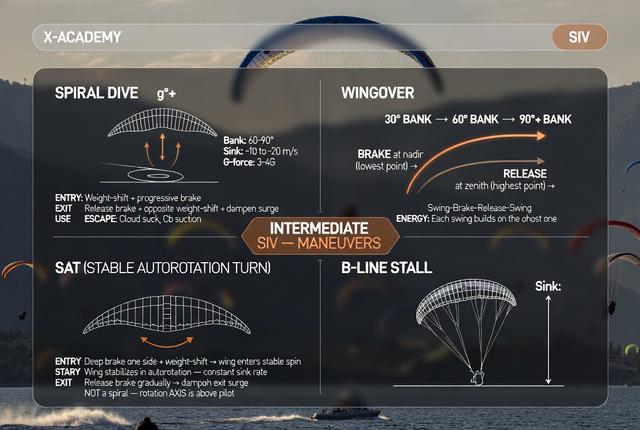
Intermediate SIV: Detailed Description of Maneuvers
Intermediate SIV maneuvers represent the boundary between standard piloting and complete dynamic control of the wing. At this stage, maneuvers are no longer just "defensive"; they become active tools for managing extreme situations.

Intermediate SIV: General Overview
Intermediate SIV (Simulation d'Incidents en Vol) is the stage where a pilot learns to manage the wing's energy. While the introductory level focuses on static collapses, the intermediate level transitions into dynamic maneuvers that require precise timing, high G-force endurance, and a complete "feel" for the wing.

Intermediate SIV: The Importance of the Course
Intermediate SIV is not just about "more tricks"—it is the transition from static safety to dynamic management. While the introductory level focuses on preventing collapses, here you learn how to handle the massive kinetic energy a wing accumulates during turbulence or maneuvers.

The Role of the Instructor at the Intermediate Level (Intermediate SIV)
At the Intermediate SIV level, the instructor's role undergoes a fundamental shift. While they were a "teacher" at the introductory stage, they now become your co-pilot and critical safety manager. Maneuvers at this stage are so rapid and dynamic that a pilot's reactions often cannot keep pace with the events; therefore, every command issued by the instructor must be executed with split-second precision.