On this page
At the P3 level, a deep understanding of equipment technical specifications is critical, as this is the stage where a pilot begins to maximize flight efficiency and overall performance.
Here is the comprehensive English breakdown of these topics:
1. Advanced Use of Variometer and GPS
Modern flight instruments provide pilots with data that is essential for real-time decision-making:
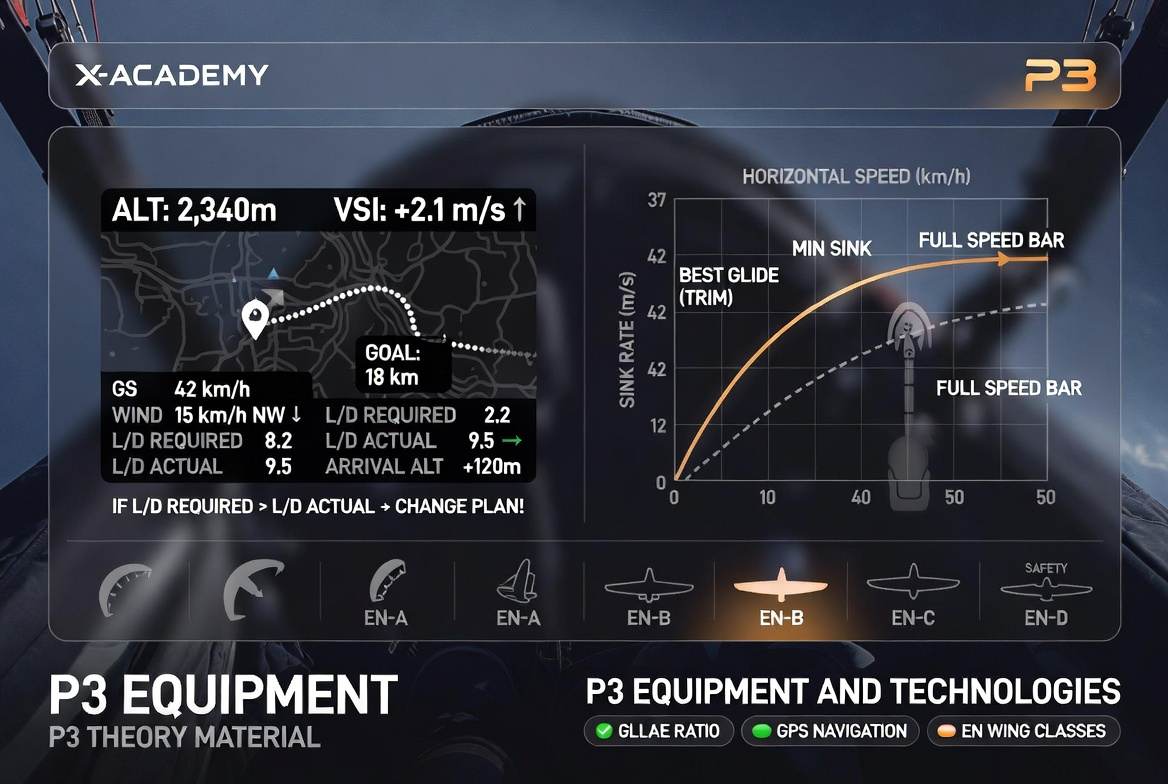
Glide Ratio (L/D): This figure shows the distance you will travel for every 1 meter of altitude lost. A P3 pilot must monitor the "Required Glide" to reach a goal. If your instrument shows you need an 8.0 glide to reach the LZ, but your wing is only achieving 5.0 due to a headwind, you must change your plan immediately.
Ground Speed (GS): Through GPS, you see your actual speed relative to the ground. This is vital in strong winds to avoid Blowback (being pushed backward) and to correctly determine your landing trajectory.
Wind Speed & Direction: Instruments calculate wind strength and direction based on your track's drift. This assists in finding the thermal core and identifying safety zones.
2. Effective Use of the Speed Bar (Accelerator)
The speed bar is not just a "gas pedal"; it is a sophisticated aerodynamic tool:
Polar Curve: Every wing has its own polar curve, which illustrates the relationship between horizontal speed and sink rate.
When to Use It:
Headwind: Using the speed bar in a headwind improves your glide ratio (you travel further).
Sinking Air (Sink): To exit a strong downward current quickly, an increase in speed is required.
Safety: In turbulent air, pushing the speed bar decreases the wing's Angle of Attack (AoA), which increases the risk of a frontal collapse. A P3 pilot must practice "Active Speed Bar"—instantly releasing the bar if internal wing pressure drops.
3. Wing Classification (EN Certification)
Wings are classified based on their Passive Safety (how the wing recovers from a collapse without pilot intervention), rather than aesthetic appeal:
ClassCharacteristicsIntended ForEN-AMaximum passive safety. Very forgiving of errors.Beginners and flight schools.EN-BGood balance between safety and performance.Advanced P2 and P3 pilots (Standard/High-B).EN-CRequires constant pilot intervention and significant experience.Experienced XC pilots flying frequently in thermals.EN-DHighly sensitive and demanding. Designed for athletes.Professional pilots and high-level competitions.
Important Note: Transitioning to the P3 level does not automatically mean switching to an EN-C wing. Many modern "High-B" wings provide high safety margins while offering more than enough performance to complete ambitious cross-country routes.