On this page
Introduction
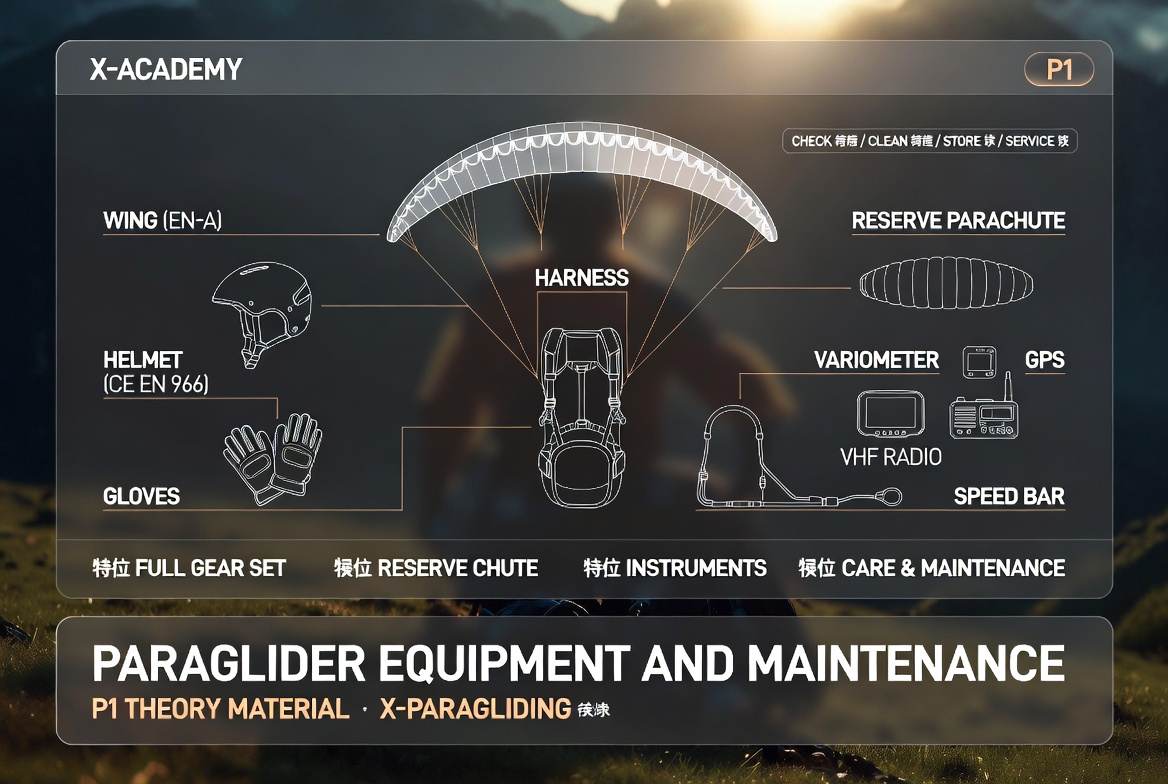
Knowing paraglider equipment and proper maintenance is an essential component of pilot safety. Your equipment is your safety guarantee in the air.
Essential Equipment
1. Wing (Canopy)
The wing is the most critical component of a paraglider.
Components:
Upper surface — top of the aerodynamic profile
Lower surface — bottom of the aerodynamic profile
Ribs — internal structure that gives shape
Cells — air intake openings
Lines — connecting lines between wing and harness
Certification:
EN-A — beginners (safest, maximum stability)
EN-B — intermediate
EN-C — advanced
EN-D — expert / competition
For P1 pilots: only EN-A class wings!
2. Harness
The harness is the "seat" the pilot sits in during flight.
Types:
Standard — adequate protection, comfortable
Pod/Cocoon — aerodynamic, for XC flying
Lightweight — light, for Hike & Fly
3. Reserve Parachute
Types:
Round — classic, reliable
SQR (Square) — steerable, good stability
Rogallo — steerable, expensive
4. Helmet
Mandatory for every flight!
Certified EN 966 or EN 1077
Open face or full face — by preference
5. Instruments
Variometer — vertical speed indicator (beep-beep)
GPS — position and track recording
Radio — communication with instructor
Equipment Maintenance
Wing Care
Never leave in the sun (UV destroys fabric)
Never store wet
Dry in shade, naturally
Store in dry, cool place
Do not treat with chemicals
Every 2 years — professional inspection
Line Care
Regular inspection for wear and damage
Avoid knots
Do not use damaged lines!
Harness Care
Inspect buckles and carabiner condition
Check protector integrity
Professional service when needed
How Much Does P1 Equipment Cost?
| Component | New (€) | Used (€) |
|---|---|---|
| Wing EN-A | 2,000-3,500 | 800-2,000 |
| Harness | 500-1,200 | 200-600 |
| Reserve | 400-800 | 200-400 |
| Helmet | 80-250 | 40-120 |
| Variometer | 200-600 | 100-350 |
Conclusion
Equipment is your safety guarantee. Never compromise on safety! When purchasing, follow certification requirements and instructor recommendations.