P1 — Basic Knowledge Test
Test your knowledge on all P1 course topics — aerodynamics, meteorology, safety, takeoff/landing and equipment. Maximum 2 errors allowed out of 10 questions.
47 questions9 errors allowed45 min
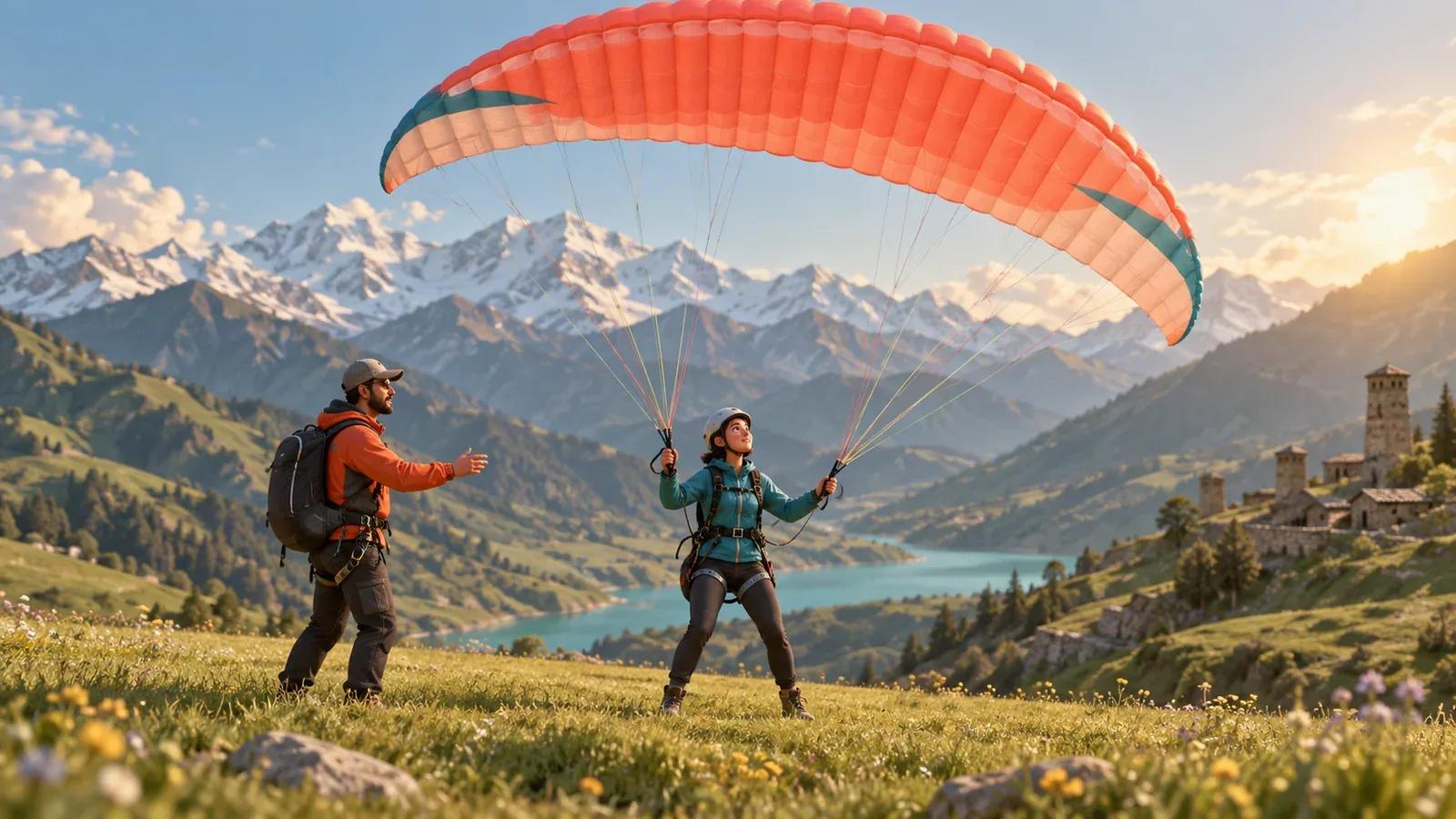
P1 – Beginner This is the introductory stage where the student learns the basics and takes their first steps. What it includes: Equipment familiarization, ground handling (kiting), launching from low-incline slopes, and straight-line flights. Goal: For the pilot to understand how the wing responds to control toggles. At this stage, flights are very short and at low altitudes.
6 modules 25 lessons Estimated lesson time: 29 h
+1 module
View Full Syllabus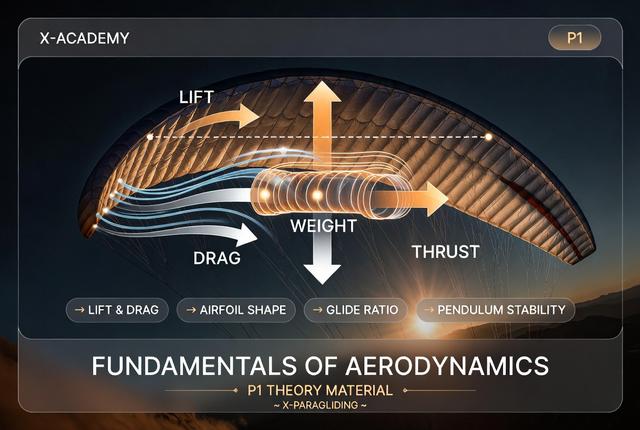 01
Understand how your wing creates lift and keeps you flying. Learn simple, easy-to-understand concepts using everyday analogies - from why air pressure pushes your wing up, to how you control your paraglider with brakes. Master the key ideas that every P1 student must know.
 02
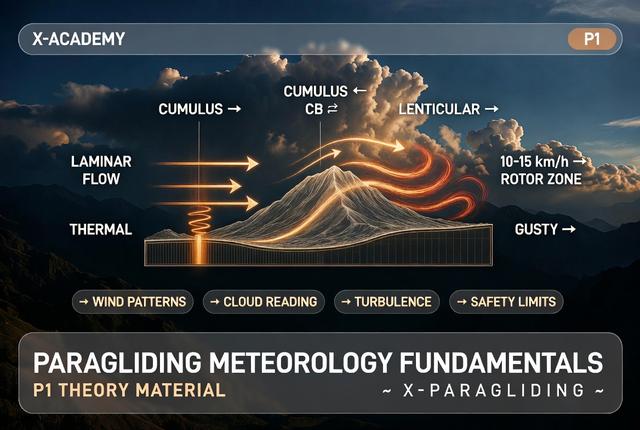
Reading the weather is the most important skill for a paraglider pilot. Learn in simple terms how the sun creates "air elevators", which clouds are your friends, and when it is best to stay on the ground.
 03
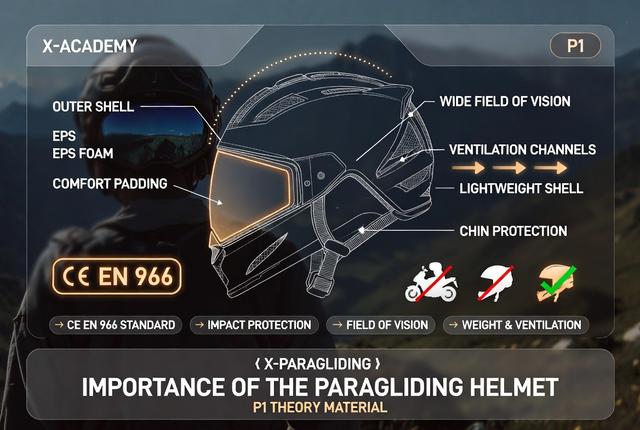
In paragliding, a helmet is the most critical piece of protective equipment. Many beginners mistakenly believe that a motorcycle or ski helmet is sufficient; however, helmets specifically designed for flight have unique characteristics tailored to the sport's needs.
 04
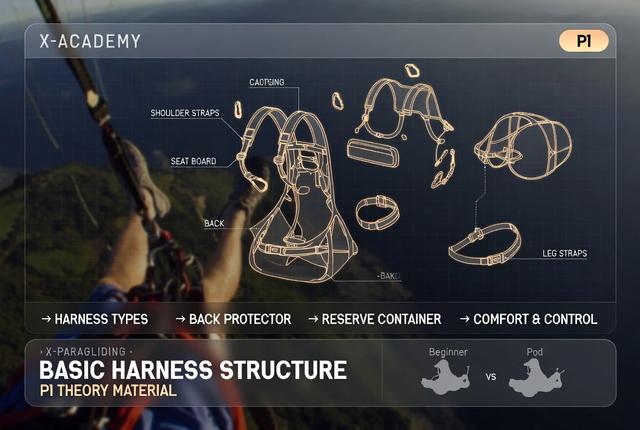
In paragliding, the harness is more than just a seat; it is a primary control and protection system. Its design and type directly impact flight comfort, safety, and pilot performance.
 05
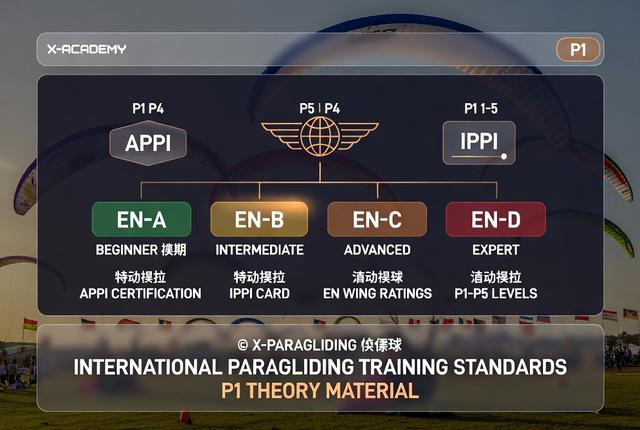
International paragliding standards ensure that pilots receive uniform, high-quality, and safe education anywhere in the world. Our platform provides a general overview of these standards, divided into several key aspects. Our theoretical courses and practical training sessions are strictly based on these international guidelines.
 06
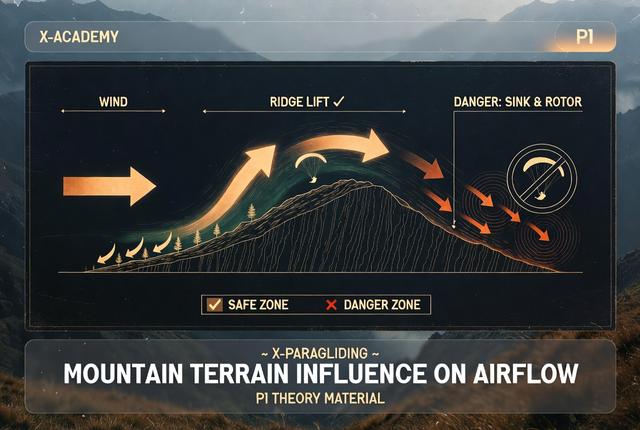
Analyzing the flying site terrain and landing/takeoff areas is the foundation of safety in paragliding. A pilot must be able to "read" the environment to determine airflow patterns and identify potential hazards.
 07
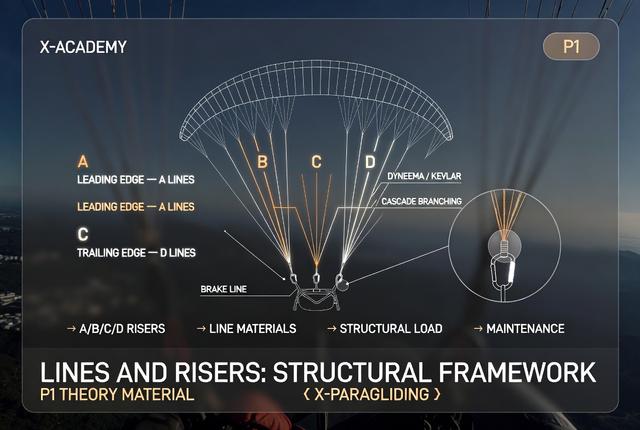
Paraglider lines constitute the structural framework that connects the canopy to the pilot's harness. Their proper selection and maintenance are crucial for preserving the wing's aerodynamic shape and ensuring flight safety.
 08
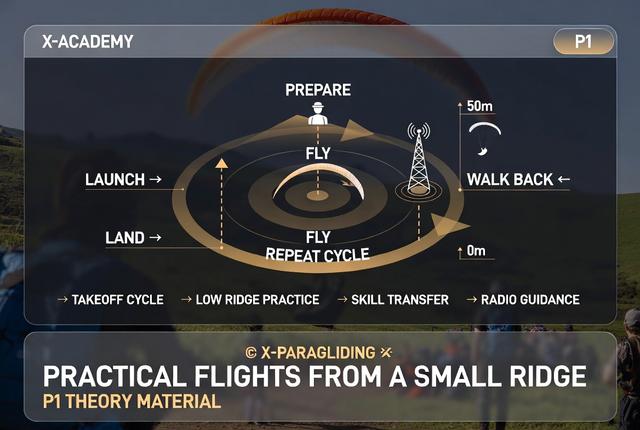
Practical training from a low mountain ridge is one of the most vital stages of paragliding education. This is where skills learned during ground handling are transitioned to actual altitude. A low ridge allows for high-repetition cycles of takeoffs and landings, which is essential for building confidence.
 09
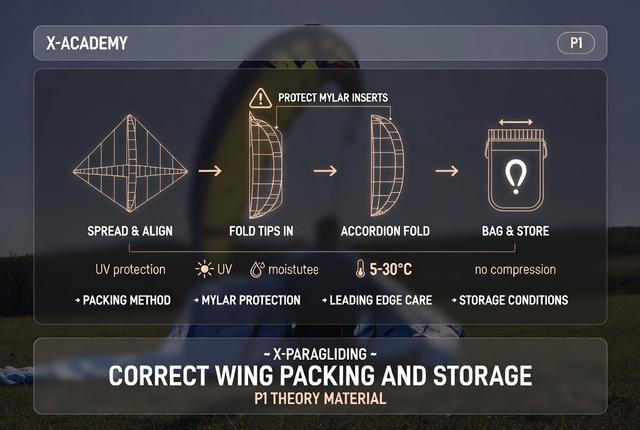
Properly folding and storing your paraglider is directly linked to the longevity of your wing. Incorrect folding can damage the Rigid Foils (Nylon rods) that give the leading edge its aerodynamic shape.
 10
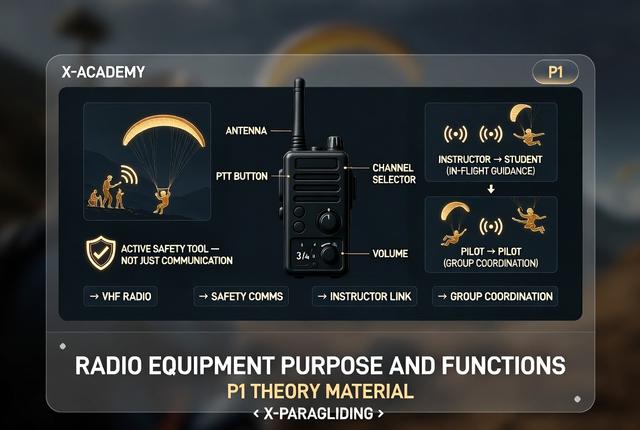
In paragliding, a radio station (transceiver) is not just a communication tool—it is an integral part of active safety. Its proper use is often decisive in preventing incidents, especially during the training process and group flights.
 11
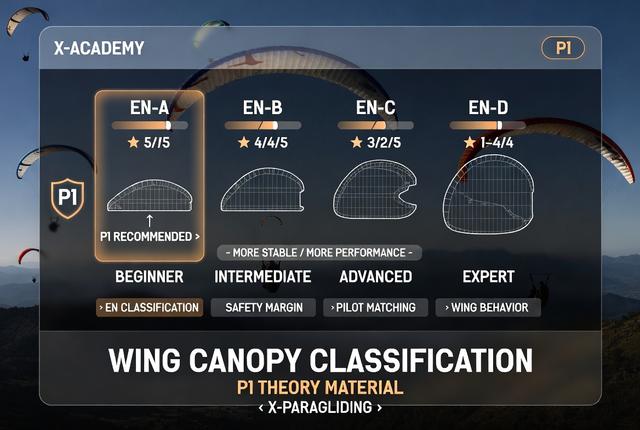
The canopy (wing) is the most critical component of a paragliding system. Its selection must correspond to the pilot's qualification level, as it determines both flight safety and dynamics.
 12
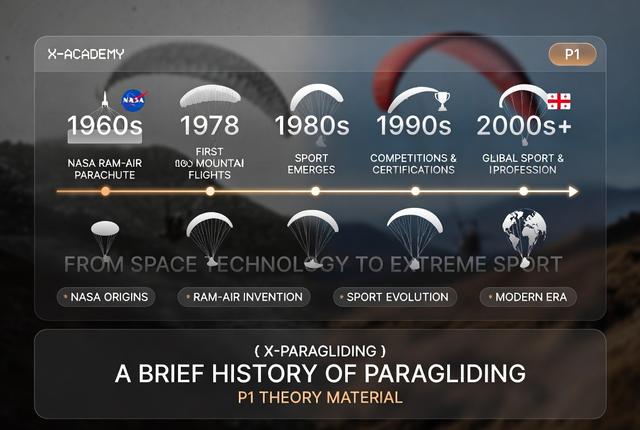
The historical journey of paragliding's development is a fascinating path that began with space technology and evolved into a modern extreme sport, eventually becoming a professional adventure activity.
 13
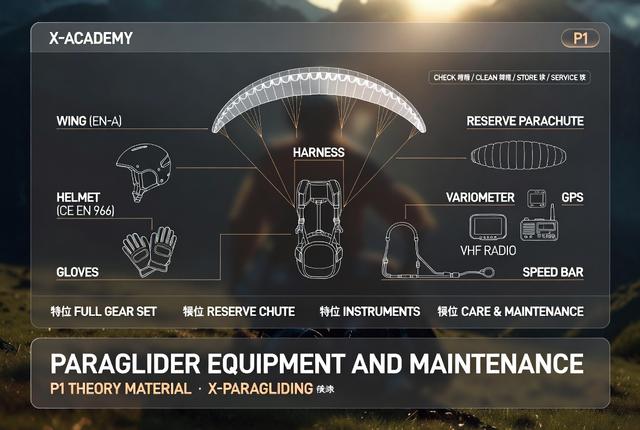
Wing, harness, reserve, helmet, instruments — complete overview and maintenance tips.
 14
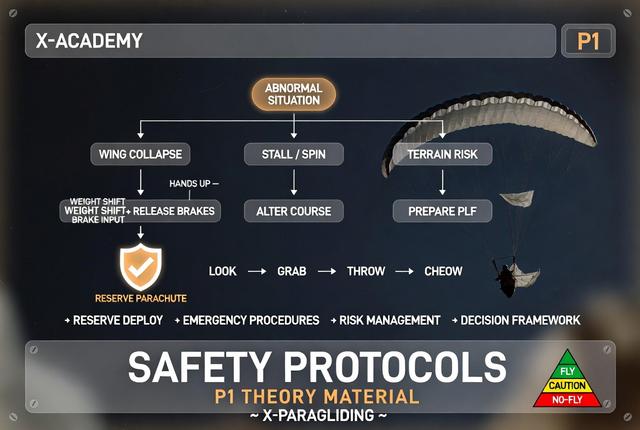
Pre-flight check, reserve parachute, emergency procedures and risk management in paragliding.
 15
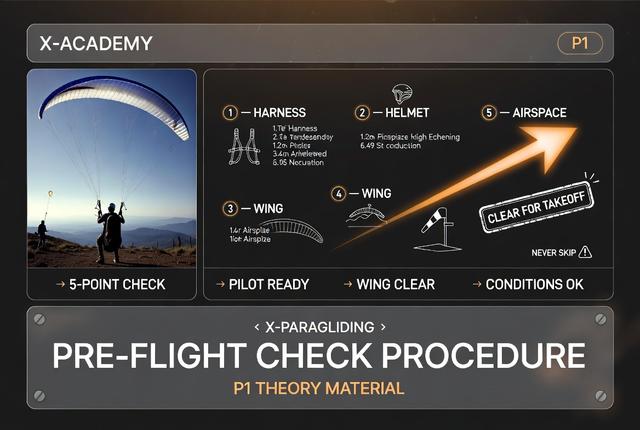
The Pre-flight Check is the most critical moment in paragliding. Statistically, the majority of incidents occur due to small details that were not verified before takeoff. In international practice, a 5-point check system is established, which every pilot must perform before launching:
 16
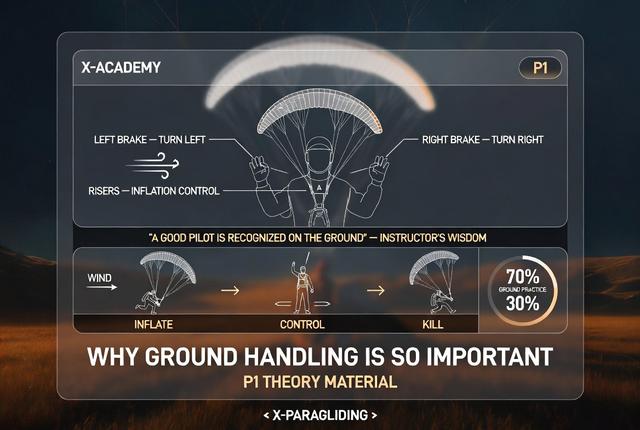
In paragliding, ground training—internationally known as Ground Handling or Kiting—is of decisive importance. Experienced pilots often say, "A good pilot is revealed on the ground." The more confidently you manage the wing on the ground, the safer and smoother your takeoff and flight will be.
Test your knowledge on all P1 course topics — aerodynamics, meteorology, safety, takeoff/landing and equipment. Maximum 2 errors allowed out of 10 questions.
Not at all! The P1 course is specifically designed for complete beginners. We teach everything from scratch — from paraglider anatomy to independent flight. Your starting level is never an issue; our instructors adapt the pace individually for each student.
Classes are held only in safe meteorological conditions. Wind speed ≤ 20 km/h, no precipitation, visibility > 3 km. In case of bad weather, we conduct theoretical lessons or reschedule. You will never be put at risk — our instructor evaluates weather forecasts every morning.
Full set rental (paraglider + reserve + helmet + harness) for the course period is 350 GEL for 7 days. Individual items are also available: paraglider — 200₾, reserve — 80₾, helmet — 30₾, harness — 80₾. Indicate what equipment you need during registration.
With professional training and proper equipment, paragliding is one of the safest air sports. Our statistics: 10,000+ training flights without incidents. Every student is equipped with a reserve parachute, radio communication, and CE-certified helmet. Training is conducted exclusively on EN-A (safest class) paragliders.
Bad weather days are automatically added to the course duration — you don't lose any flying days! During such times, we conduct: theoretical lectures (aerodynamics, meteorology), simulator exercises, video analysis of previous flights, and equipment maintenance practice.
The course price includes: all training sessions, instructor service, radio communication, and P1 certificate. Accommodation and meals are not included, but we help find budget options in Gudauri (avg. 60-120₾/night). Transport from the flight site to camp is free.