On this page
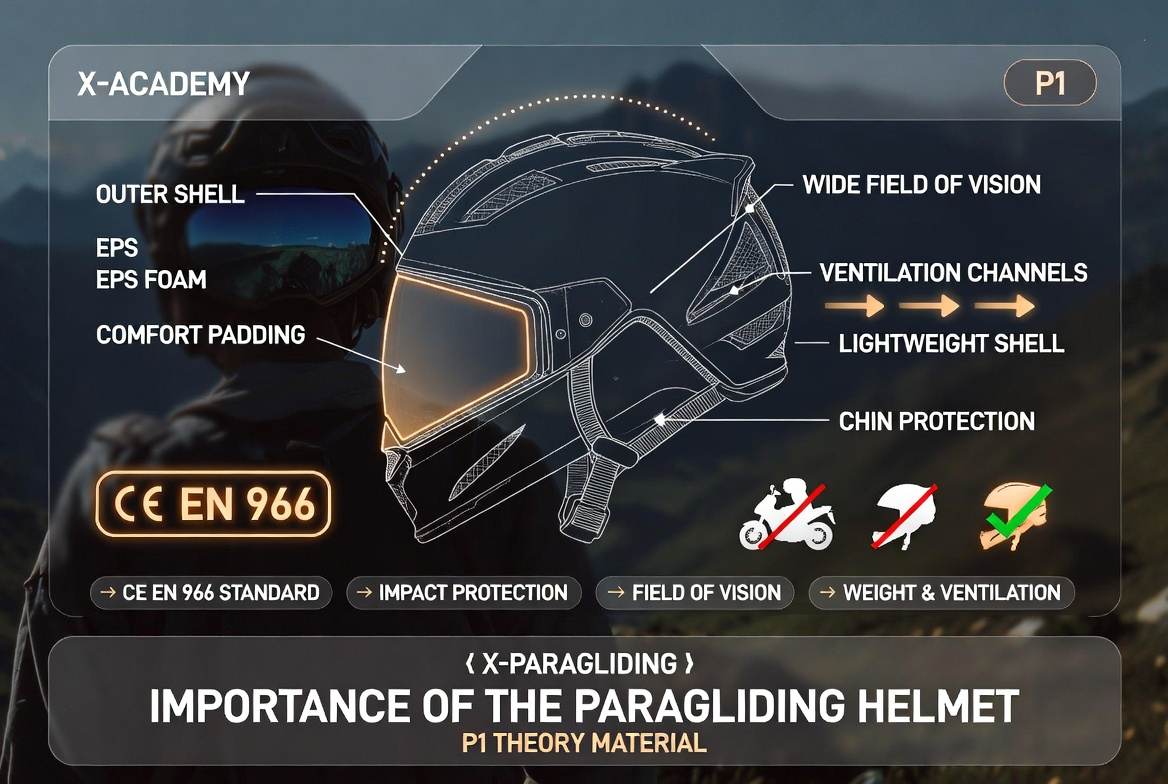
In paragliding, a helmet is the most critical piece of protective equipment. Many beginners mistakenly believe that a motorcycle or ski helmet is sufficient; however, helmets specifically designed for flight have unique characteristics tailored to the sport's needs.
1. The Importance of a Paragliding Helmet
A helmet protects the pilot from three primary hazards:
Takeoff and Landing Injuries: Protecting the head against impacts with rocks or hard surfaces during a fall.
Mid-air Collisions: Colliding with another pilot or equipment (e.g., impact with a passenger’s knee in tandem flights).
Environmental Factors: Protection from branches or rocks during an unplanned landing in trees or on rocky terrain.
2. Key Characteristics and Standards
A genuine flight helmet must meet the EN 966 standard. This is a European certification specifically designed for airborne sports.
How does it differ from other helmets?
Weight: It is extremely lightweight to prevent neck fatigue during long flights.
Field of Vision: Designed to provide maximum peripheral vision, which is vital for spotting other pilots in the air.
Hearing: It does not muffle ambient sounds, which is essential for hearing wind speed and the variometer (vario) audio signals.
Shock Absorption: Specifically engineered for the types of impacts common in paragliding.
3. Helmet Types (Differentiation)
There are two primary designs:
A. Open-face Helmet
Pros: Better visibility, increased airflow, and superior hearing.
Cons: Does not provide protection for the face or chin.
Best for: Primarily beginners and those who prefer a greater sense of freedom.
B. Full-face / Integral Helmet
Pros: Maximum protection for the chin and face.
Cons: Slightly heavier and can sometimes limit the downward field of vision.
Best for: Competition pilots and tandem pilots.
4. Radio Communication Integration
Most professional helmets feature dedicated space (or integrated systems) for radio equipment:
Speakers/Headphones: Built into the ear sections of the helmet.
Microphone: Usually on a flexible boom positioned close to the mouth (with noise-canceling features).
PTT (Push-to-Talk) Button: Often located on the side of the helmet, allowing the pilot to communicate without releasing the controls.
5. Maintenance Rules
After an Impact: If the helmet suffers a hard impact against a solid surface, it must be replaced—even if there is no visible damage. The internal protective foam layer loses its shock-absorbing properties after one major hit.
Temperature: Do not leave the helmet in direct sunlight or inside a hot car, as high temperatures damage the plastic shell and the protective EPS foam.
Key Technical Terms:
EN 966: The specific European safety standard for air sports helmets.
Peripheral Vision: What you see out of the corner of your eye while looking straight ahead.
EPS Foam: Expanded Polystyrene, the material inside the helmet that absorbs impact.
Variometer (Vario): An instrument that indicates the rate of climb or descent.