

On this page
In paragliding, the harness is more than just a seat; it is a primary control and protection system. Its design and type directly impact flight comfort, safety, and pilot performance.
1. Basic Structure of a Harness
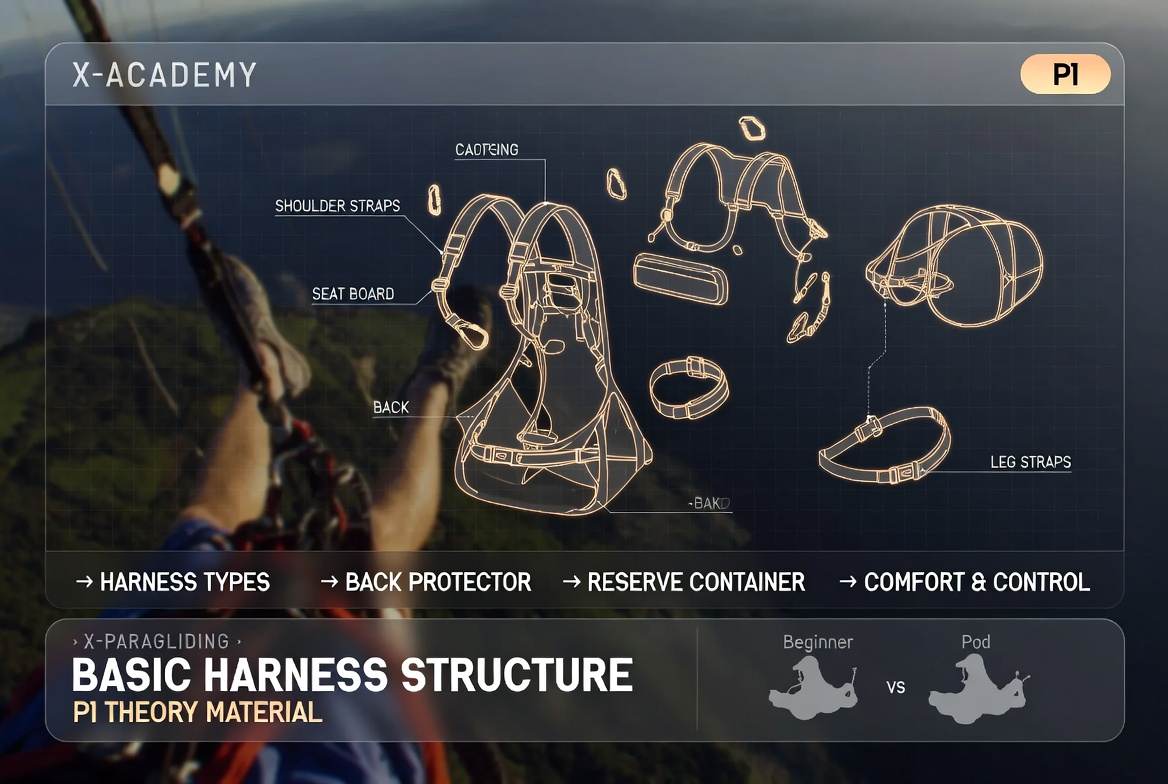
Regardless of the type, almost all modern harnesses consist of the following elements:
Chassis and Fabric: Constructed from high-durability materials like Cordura or Ripstop.
Webbing System: High-strength straps that distribute the pilot's weight and flight loads.
Carabiners: Metal connectors that attach the harness to the paraglider’s risers.
Protector: Located under the pilot's back and spine to absorb impact. There are two main types:
Airbag: Inflates using relative airflow during flight.
Mousse Bag (Foam): A specialized foam protector that maintains its shape at all times.
Reserve Parachute Container: A dedicated compartment where the reserve (emergency) parachute is stowed.
Seat Plate: A rigid base that assists the pilot in weight-shift steering.
2. Harness Types and Differences
Paragliding harnesses are divided into several categories based on their intended use:
A. Training and Recreational (Standard / Open Harness)
Characteristics: The pilot sits in an upright, vertical position, making takeoff and landing easier.
Pros: Maximum safety, excellent visibility, and high comfort for beginners.
Best for: Students and pilots who prioritize simplicity and ease of use.
B. Pod / Cocoon Harness
Characteristics: The pilot is in a reclined (lying) position with legs enclosed in a streamlined fabric sleeve.
Pros: Superior aerodynamics (reduced drag) and better thermal insulation at high altitudes.
Best for: Cross-country (XC) pilots and competition athletes.
C. Lightweight / Reversible Harness
Characteristics: A minimalist harness that can be easily turned inside out to become a backpack.
Pros: Minimal weight (sometimes only 1–2 kg).
Best for: Hike & Fly enthusiasts.
3. Adjustment and Control
Properly adjusting the harness is crucial for flight dynamics:
Chest Strap: Tightening or loosening this strap changes the wing's sensitivity. A looser chest strap allows for more effective weight-shift but increases the "roll" or movement of the harness in turbulence.
Leg Straps: Ensure the pilot is securely fixed in the harness and prevents them from slipping out.
4. Safety Check (Pre-flight Check)
Before every takeoff, the pilot must verify the following:
Buckles: Are all buckles securely closed (especially the leg straps!)?
Reserve Handle: Is the reserve parachute handle properly fixed and accessible?
Carabiners: Are the carabiners in the correct orientation and locked?
Key Technical Terms:
Weight-shift: Controlling the paraglider by shifting your body weight in the harness.
Risers: The webbing straps of the paraglider that connect the lines to the carabiners.
Cross-Country (XC): Long-distance flying.
Hike & Fly: A discipline involving hiking up a mountain and flying down.