On this page
International paragliding standards ensure that pilots receive uniform, high-quality, and safe education anywhere in the world. Our platform provides a general overview of these standards, divided into several key aspects. Our theoretical courses and practical training sessions are strictly based on these international guidelines.
1. Leading International Systems
There are two primary global organizations that establish training frameworks:
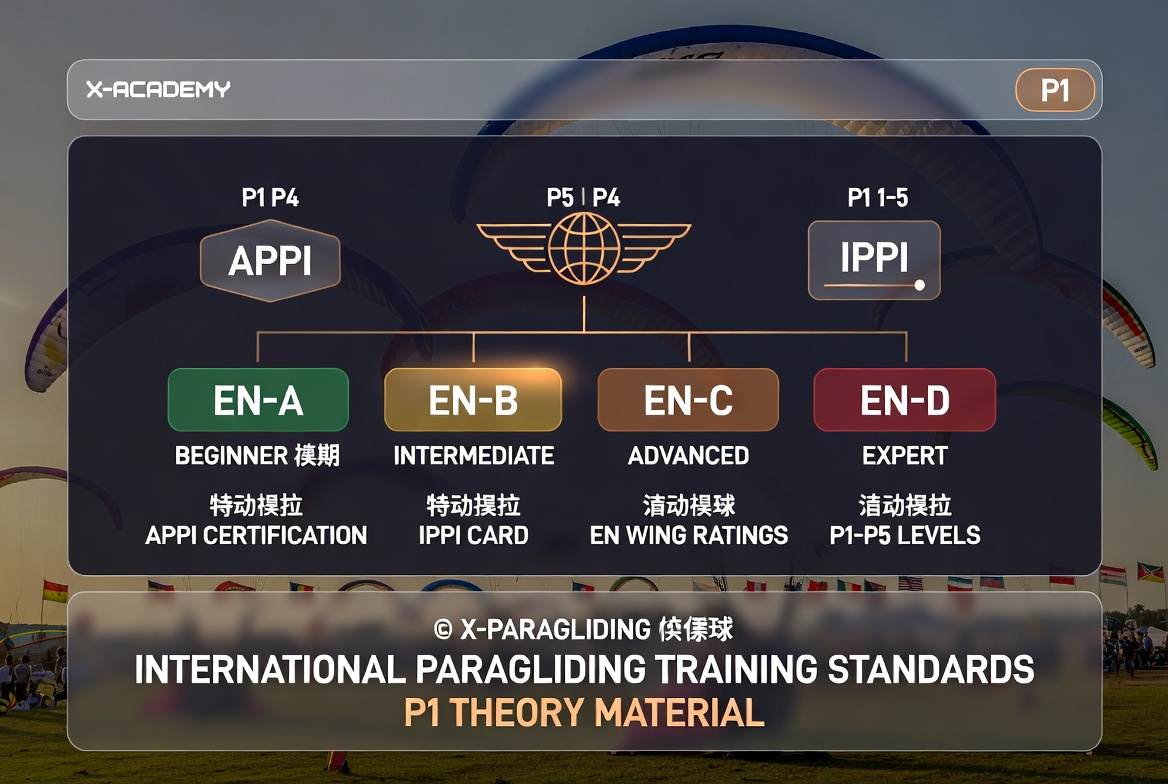
FAI (Fédération Aéronautique Internationale): Issues the IPPI Card (International Pilot Proficiency Information). This acts as a "passport" for pilots, verifying their qualifications in any country.
APPI (Association of Paragliding Pilots and Instructors): An independent international system focused on high educational quality and instructor certification. Many schools in Georgia operate under this system.
2. Training Levels (ParaPro / APPI Levels)
International standards divide training into five main levels:
LevelDesignationDescriptionP1Ground ControlGround handling (kiting), fundamentals of takeoff and landing.P2Altitude GliderHigh-altitude flights under instructor radio supervision.P3Intermediate / SoaringIndependent flight; staying aloft in dynamic (ridge) soaring.P4Advanced / ThermalUtilizing thermal updrafts and beginning cross-country routes.P5XC PilotExperienced pilot flying long distances (Cross Country).
3. Theoretical Training Standards
The international curriculum requires pilots to possess the following minimum theoretical knowledge:
Aerodynamics: Wing profile, lift, and speed range (polar curve).
Meteorology: Wind structure, turbulence, the nature of thermals, and hazardous clouds (e.g., Cumulonimbus).
Air Law: Flight priorities (Right of Way rules) and airspace restrictions.
Equipment Expertise: Wing certification (EN-A, B, C, D), and the mechanics of the harness and reserve parachute system.
4. Mandatory Safety Norms
SIV Course: According to international standards, completing an SIV (Simulation d’Incidents en Vol) course over water is mandatory for obtaining intermediate and advanced licenses.
Equipment Compliance: Training is permitted only with certified wings (EN/LTF standards). Beginners must use EN-A or low-end EN-B class wings.
Gear: Certified helmet (EN 966), gloves, high-top boots (for ankle protection), and a reserve parachute are required.
5. Examination System
To obtain a license, pilots must pass:
Practical Exam: Demonstrating proficient takeoff, spot landing, and controlled maneuvers.
Theoretical Testing: A written or electronic exam covering all the subjects mentioned above.