
On this page
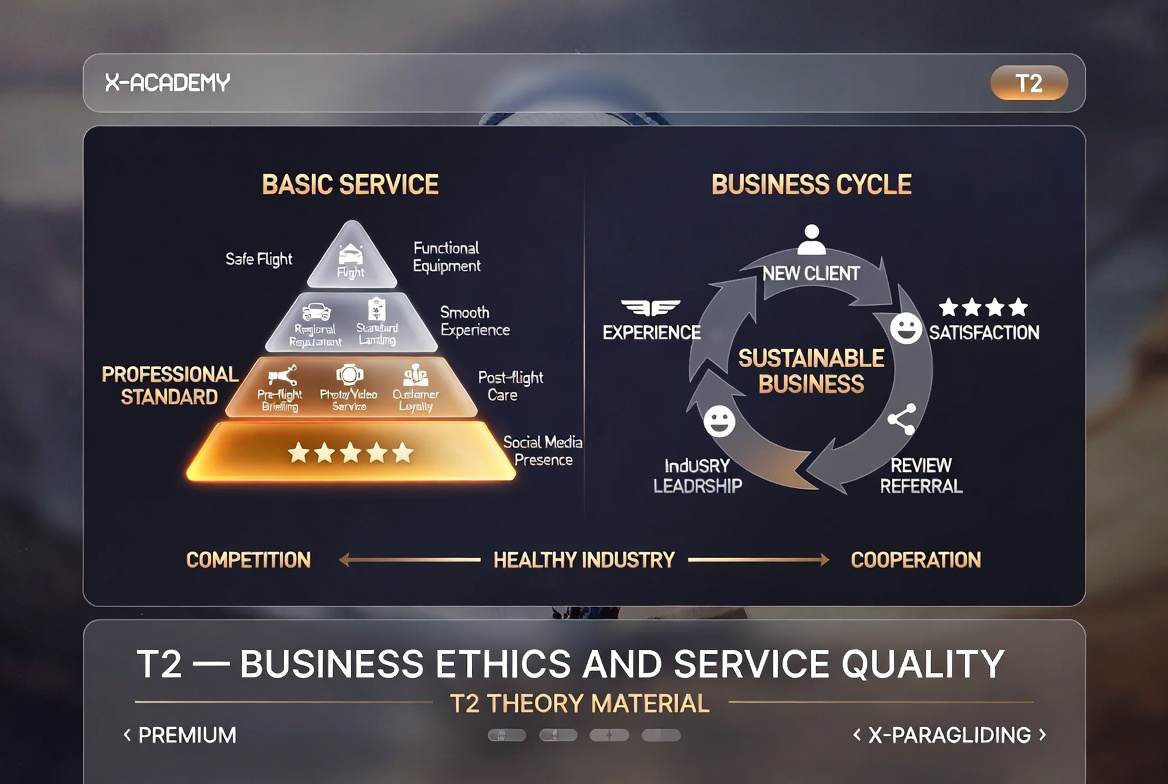
In commercial paragliding, a pilot's professionalism is not measured by flying technique alone. A T2-level pilot is a brand ambassador whose behavior determines not only the satisfaction of a specific client but also the touristic reputation of the entire region. Business ethics is the line that separates an "amateur flyer" from an "industry professional."
Here is a detailed breakdown of this subject:
1. Communication Culture and Professional Image
The first impression is formed before the flight and is decisive in gaining the passenger's trust.
Visual Standard: Well-maintained gear, clean equipment, and a professional uniform subconsciously signal to the passenger that the pilot is responsible and disciplined.
Verbal Ethics: Pilots should avoid slang, rudeness, or overly familiar addresses. Communication must be polite, calm, and informative.
Punctuality: In the commercial sector, being late increases passenger stress. Punctuality is an expression of respect for the client’s time and financial investment.
2. Safety of Photo and Video Recording
Modern paragliding is unimaginable without capturing memories, but this process must never come at the expense of safety.
Technical Safety: All cameras (GoPro, phones) must be secured with specialized lanyards. An object falling from the air can be fatal to those below.
Distraction Management: The pilot’s priority is the wing and the situational awareness in the air. Recording must not interfere with maneuvering, especially during the critical phases of takeoff and landing.
Ethical Content: The pilot must respect the passenger's privacy. Posting footage on social media should only occur with the passenger's explicit consent.
3. Balancing Service Quality and Safety
Often, a client’s desire (e.g., "more adrenaline") conflicts with safety protocols.
A Firm "No" Without Compromise: High-quality service does not mean fulfilling every passenger's whim. A professional pilot does not perform acrobatic maneuvers at low altitudes or in difficult meteorological conditions just for a "good shot."
Individual Approach: Service quality is revealed in sensing the passenger's comfort zone. Some need tranquility, while others seek dynamics. A pilot must be adaptable to the individual's needs.
Significance: Why is the Pilot the "Face of the Industry"?
Long-term Trust: A satisfied passenger leads to positive reviews, which directly impacts business growth.
Establishing a Safety Culture: When a pilot adheres to ethics and standards, it encourages colleagues to raise their own bar, reducing chaos at the flight location.
Conflict Prevention: Correct communication reduces the likelihood of misunderstandings in cases of flight cancellations or delays due to weather.
Summary
For a T2 pilot, the flight is the product they are selling. Business ethics is the "packaging" that makes this product credible, reliable, and valuable.