

On this page
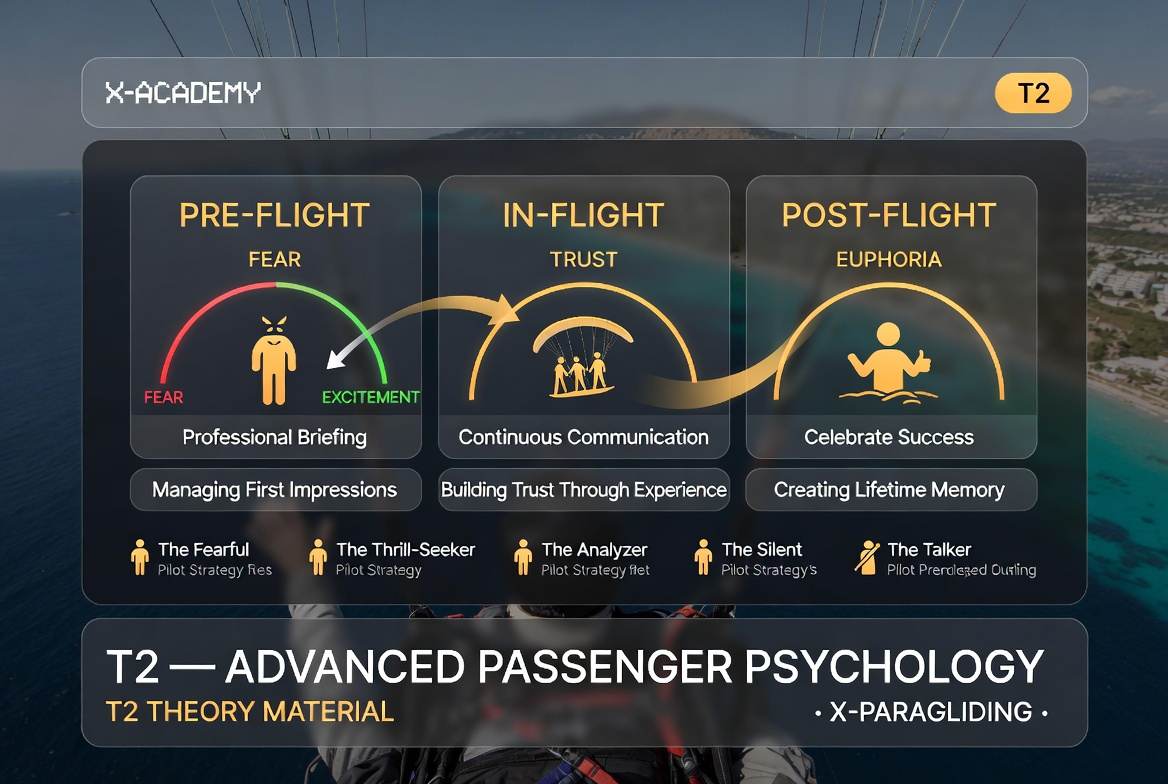
In commercial flights, a pilot's mastery is not defined solely by wing control. A T2-level pilot is both a leader and a psychologist, responsible not only for the passenger’s physical safety but also for their mental well-being. For many passengers, this is a once-in-a-lifetime experience, and the pilot’s behavior determines whether it remains a traumatic memory or a thrilling adventure.
Here is an in-depth breakdown of this critical subject:
1. Identifying and Managing Hidden Fear
Passengers often attempt to hide their fear through "forced cheerfulness" or, conversely, total withdrawal.
Non-verbal Cues: Dilated pupils, trembling hands, rapid breathing, or a "frozen" gaze. The pilot must identify these signs while still on the ground.
Empathetic Communication: Instead of saying "don't be afraid," a professional uses validation: "It is natural to feel a bit of excitement/anxiety; that is part of the adrenaline."
Building Trust: Demonstratively checking the equipment and using a calm, confident voice sends a signal to the passenger that the situation is under full control.
2. Managing Motion Sickness and Physical Discomfort
In 15–20% of commercial flights, passengers experience discomfort, which is often caused by the pilot's improper maneuvering.
Prevention in the Air: Avoid sharp maneuvers and constant spirals unless the passenger is explicitly ready for them. Ask the passenger: "How are you feeling? Would you like a smoother flight or a bit of adrenaline?"
Focusing on the Horizon: If a passenger feels nauseous, tell them to look far toward the horizon rather than straight down. Fresh airflow on the face and smooth, straight flight significantly reduce symptoms.
Action Plan: A pilot must always have a motion sickness bag in an accessible place and know how to descend quickly but gently.
3. Panic Prevention and Crisis Communication
Panic in the air is the most dangerous scenario, as a passenger might physically interfere with the pilot’s control.
Regaining Control: If a passenger begins to panic, give them a simple task. For example: "Take a deep breath and count to three out loud for me." This forces the brain to switch from emotional mode to rational mode.
Voice Control: The pilot's voice must be dominant, calm, and clear. There should be no shouting or visible confusion.
Positive Reframing: During turbulence, do not just say "it's not dangerous." Instead, say: "These are just air currents, like waves on the sea; our wing is designed specifically for this."
Significance: Why is the Pilot a "Psychologist"?
Safety Guarantee: A calm passenger ensures a safe launch and landing. A panicking person may fail to follow commands (e.g., failing to run during takeoff), which increases the risk of injury.
Business Reputation: A passenger remembers how you made them feel, not just how many meters high you climbed. A positive emotional experience is the best form of marketing.
Professional Ethics: For a T2 pilot, a client is not just "cargo." They are an individual, and helping them overcome their fears is a professional victory for the pilot.
Summary
Technical skills keep a pilot in the air, but psychological skills make them a professional. A T2 pilot manages not only the wing but the entire atmosphere within the crew.