On this page
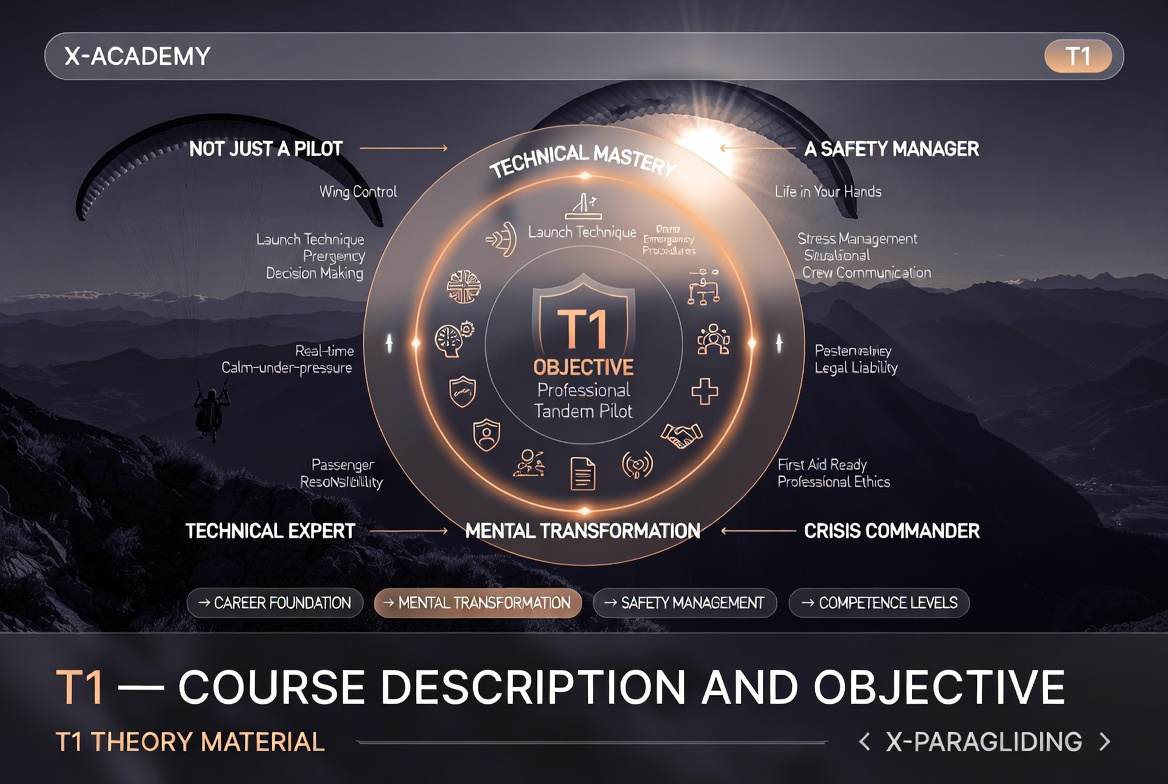
The description and objective of the T1 Course serve as the foundation upon which a professional tandem pilot's career is built. This is not merely an "additional certification"; it is a profound mental and technical transformation of the pilot.
Here is the in-depth and comprehensive breakdown of this module:
1. Course Philosophy: From Individualism to Altruism
In solo flight, a pilot is responsible only for themselves, and their decisions affect only them. The primary goal of the T1 course is to shift this paradigm.
The Burden of Responsibility: The pilot becomes the "Captain of the Air," holding another person's life and health in their hands. The course teaches the pilot how to manage their own emotions so that the passenger feels complete security.
A New Standard of Risk Management: While a solo pilot might test the limits of their capabilities, this is unacceptable in tandem flight. The T1 course aims to teach "conservative flying"—always maintaining a significant Safety Margin.
2. Technical Objective: Managing High Inertia
A dual-seater paraglider (Tandem) behaves physically differently. A mass of up to 200 kg creates immense inertia, which completely alters flight dynamics.
Mastering Dynamic Reactions: A tandem wing initiates maneuvers more slowly, but once in motion, it carries great energy. The course goal is for the pilot to learn Proactive Piloting (Anticipation)—acting one step ahead before the wing responds.
Critical Phases of Takeoff and Landing: Launch and landing are the most high-stakes stages for a tandem. The course aims for the pilot to master the "synchronized start" (where passenger and pilot run as a single organism) and a soft Flare during landing to minimize the load on the passenger's legs.
3. Passenger Management: Handling the "Living Load"
A passenger is not a passive object; their behavior directly impacts flight safety.
Psychological Control: The course aims to develop instructional skills in the pilot. They must be able to prevent panic attacks in the air and manage the passenger so that they do not stop running during the launch.
Ergonomics and Comfort: The pilot must learn the correct way to seat the passenger in the harness and ensure their comfort, as physical discomfort can lead to erratic or dangerous passenger movements.
4. Legal and Professional Preparation
The T1 level is the first step toward commercial or professional activity.
Aviation Regulation Proficiency: The goal is for the pilot to have a thorough knowledge of the legal frameworks required for tandem flights, insurance principles, and local restrictions.
Equipment Expertise: Tandem gear (spreaders, carabiners, reserves) is more complex. The course ensures the pilot knows how to perform an expert Pre-flight check and assess the wear and tear of every component.
Summary
Upon completion of the T1 course, a pilot is not simply an individual who "flies with a passenger." They are a Professional Pilot capable of controlling a complex aerodynamic system, responsible for creating the safest and most positive flight experience possible for the passenger.