

On this page
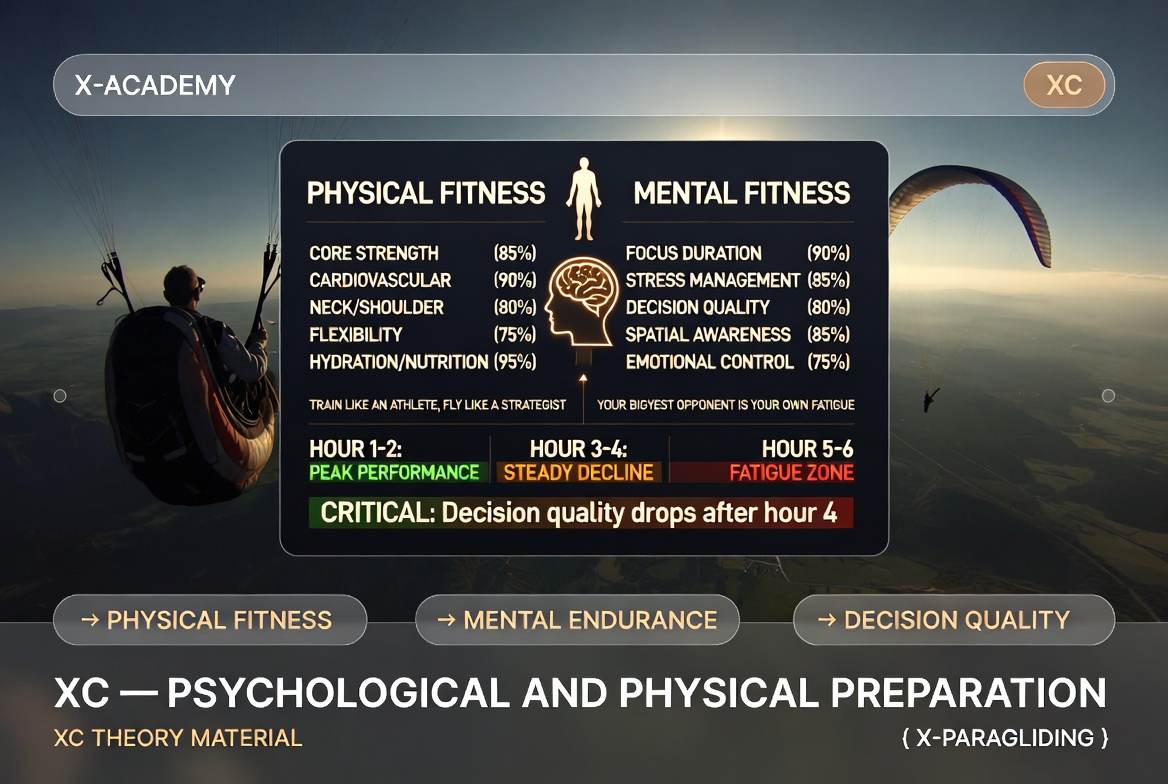
XC (Cross-Country) flying is not just about wing control; it is the ultimate test of a pilot's endurance and mental fortitude. When you spend 4, 5, or 6 hours in the air, your primary opponent is not the weather, but your own fatigue and stress.
Here is an in-depth overview of psychological and physical preparation:
1. Concentration and Mental Endurance
XC flying is a non-stop marathon of decision-making. Every minute demands attention: Where is the wind coming from? Where is the next thermal? Where is a safe landing field?
Vigilance During Fatigue: After 3 hours of flying, the brain begins to enter "power-saving mode," leading to a lapse in concentration. In the XC course, you learn mental techniques to maintain focus during critical moments so you don't miss weather changes or terrain hazards.
Decision-Making Skills: In stressful situations (e.g., when altitude is critically low), panic is the pilot's enemy. You learn to manage emotions and act with a "cool head" to choose the best trajectory rather than simply "going with the wind."
2. Patience – "The Art of Waiting"
Many pilots end their flights prematurely simply because they lack patience. In XC, the winner is the one who fights until the very end.
Working at Low Altitudes (Low Save): Sometimes you find yourself close to the ground where the thermal is very weak. This requires nerves of steel—not giving up and "waiting it out" until the lift strengthens.
Waiting for Cycles: Nature is cyclical. You learn to understand that if there is no thermal right now, it will likely arrive in 5 or 10 minutes. Patience is what distinguishes a professional from an average pilot.
3. Nutrition and Hydration in the Air
Physical condition is directly linked to mental performance. A dehydrated and hungry pilot is a dangerous pilot.
Hydration System (Camelbak): A water reservoir is essential for an XC pilot, allowing you to drink without letting go of the controls. A lack of water leads to headaches and slowed reaction times.
Energy Management: You learn to consume high-calorie, easily digestible food (energy bars, gels) during the flight. This helps maintain blood sugar levels, which is necessary for brain function during a 5-hour workload.
4. Summary: Developing the Traveler and the Strategist
The XC course is a transformation. You are no longer just a pilot "hanging in the air"; you are an aerial traveler.
The Intellectual Peak: This is chess against nature, where every move is calculated and deliberate.
The Ultimate Sense of Freedom: Nothing compares to the feeling of crossing mountains, seeing new valleys, and covering distances that previously seemed impossible—all using nothing but your own knowledge and the energy of nature.
The XC course is the path to freedom, which can only be achieved through knowledge and preparation.