On this page
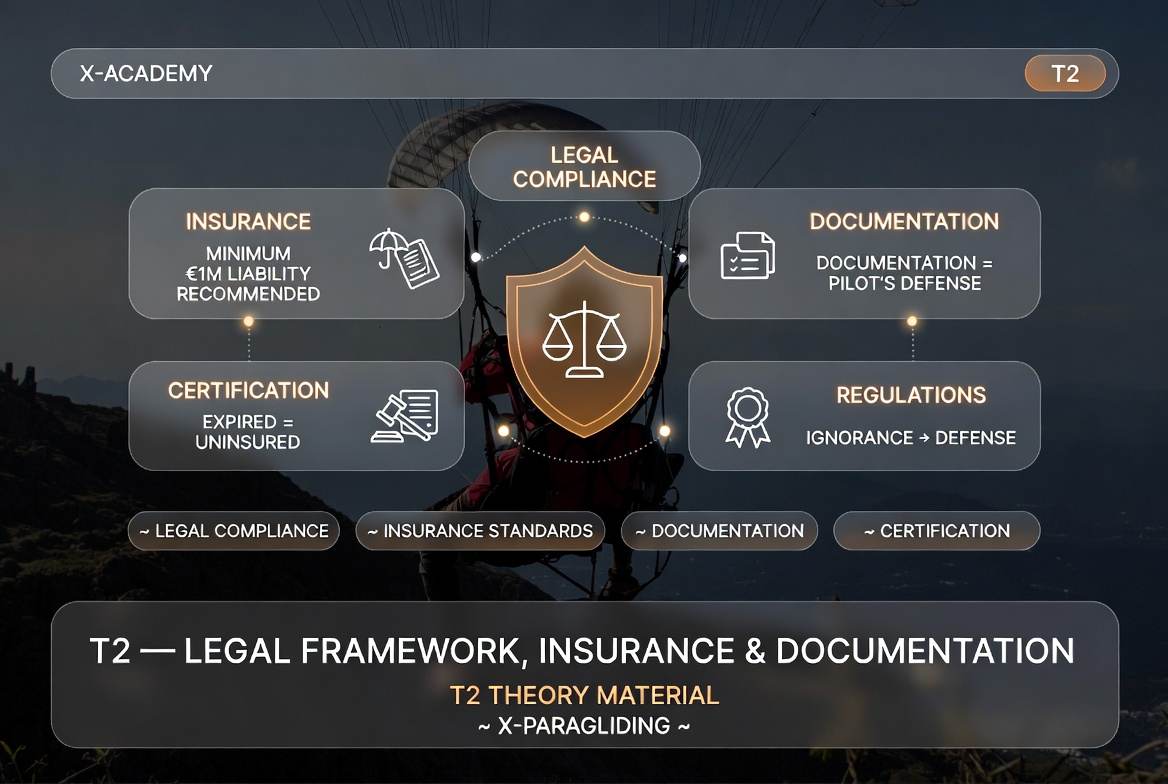
Professional paragliding is not just about flying in the sky; it is a business associated with high risk. For a T2-level pilot, legal compliance is as important as carrying a reserve parachute. In the event of an incident, it is the documentation that determines the pilot’s future—whether they continue their career or face criminal liability.
Here is a detailed analysis of this critical subject:
1. Liability Waiver / Release Form
This is the most crucial document executed between the pilot (or company) and the passenger before the flight.
Informed Consent: The passenger must confirm in writing that they have been briefed on the risks associated with the flight and that they voluntarily accept these risks.
Health Declaration: The passenger confirms they do not have medical conditions (e.g., epilepsy, heart disease, spinal injuries) that would make flying dangerous.
Legal Force: A correctly drafted waiver protects the pilot from lawsuits in cases where an incident occurs due to force majeure or unforeseen circumstances, rather than pilot negligence.
2. Third-Party Liability Insurance
For a commercial pilot, personal insurance is not enough; specialized aviation insurance is highly recommended.
Passenger Protection: Insurance covers the passenger’s medical expenses or provides compensation in case of injury.
Third-Party Damage: If you damage someone else’s property (e.g., a car, crops) or injure a bystander during landing, the insurance will cover these losses.
Professional Guarantee: In many countries and locations (e.g., EU, Turkey), commercial flying without insurance is prohibited by law and considered a criminal act. This issue depends on the specific legislative norms of the given country.
3. Air Law and Regulations
The pilot must act as the "Pilot in Command" (PIC) and adhere to established rules.
Airspace Structure: The pilot must know where flight is permitted and where it is prohibited (e.g., near airports, military zones).
Right-of-Way Rules: Strict adherence to flight priorities in relation to other aircraft.
Certification: Possessing a valid pilot license/certificate, a medical certificate, and equipment airworthiness certification.
Significance: Why is this "Legal Safety"?
Pilot Protection: During a post-incident investigation, the first thing checked is the paperwork. If the documentation is in order, the pilot's liability is significantly reduced.
Business Sustainability: A well-organized legal framework increases trust among passengers and partners toward the company.
Professional Standard: The T2 level means the pilot is no longer a "rogue" flyer. They are a full-fledged subject of aviation and business who respects the law.
Summary
In the air, a good pilot is protected by their wing; on the ground, they are protected by a correctly filled-out form. Studying these issues during the T2 course ensures that the pilot is protected not only from physical incidents but also from legal "collapses."