On this page
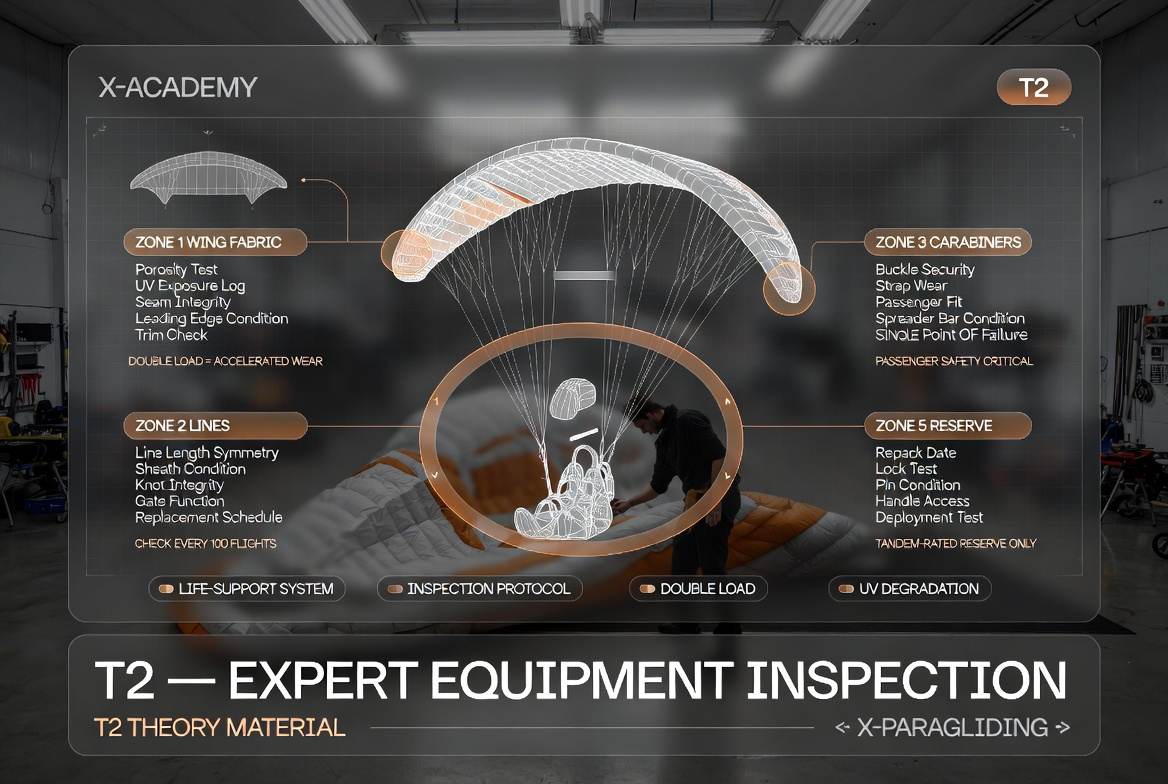
In commercial tandem piloting, equipment is not just a tool—it is a life-support system. Unlike solo wings, a tandem wing undergoes double the load, frequent takeoffs and landings, and constant exposure to solar radiation (UV). A T2-level pilot must be an expert inspector capable of identifying technical defects before they become critical.
Here is a detailed breakdown of expert equipment inspection:
1. Fabric Porosity Test
Over time, paraglider fabric loses its airtightness, which directly impacts flight safety.
Technical Essence: Using a specialized tool called a porosimeter, the time it takes for a certain amount of air to pass through the fabric is measured. The faster the air passes, the more worn the wing is.
Impact on Flight: High porosity leads to the "aging" of the wing—its aerodynamic characteristics change, the risk of a deep stall increases, and the launch process becomes significantly more difficult.
Professional Control: A T2 pilot is obligated to conduct a laboratory inspection after every 100–150 flight hours or at least once a year.
2. Line Strength and Geometry
Lines are the most vulnerable point of a tandem, as they bear a constant load of up to 200 kg.
Strength Test: Periodically, one control line is broken on a specialized machine to determine if it still meets the required safety standards.
Trim Check (Laser Alignment): Over time, some lines stretch while others shrink (especially the rear lines). Even a 1–2 cm deviation can make the wing dangerous to handle.
Visual Inspection: Before every flight, the pilot must inspect lines for core damage, knots, or wear on the protective sheath.
3. Scheduled Tandem Reserve Repacking
The rescue parachute is the pilot's last hope, and its functionality depends 100% on proper maintenance.
Repacking Interval: According to professional standards, a tandem reserve must be repacked every 6 months. This prevents the fabric from "sticking" together and ensures rapid deployment.
Aeration/Ventilation: Before repacking, the reserve should be deployed in a dry, shaded area for 24 hours to let the fabric "breathe."
System Check: The state of the handle, connecting carabiners, and bridles must be inspected to ensure the system activates instantaneously when needed.
Significance: Why is this the Pilot's Obligation?
Prevention of Critical Wear: Commercial operation (5–10 flights a day) means equipment wears out three times faster than in solo flying.
Legal Liability: In the event of an incident, if it is determined that the cause was expired or faulty equipment, the pilot faces full criminal liability.
Economic Efficiency: Timely inspections and minor repairs (e.g., replacing a single line) are far cheaper than replacing a wing that has failed prematurely due to neglect.
Summary
For a T2 pilot, equipment is not a "constant"—it is a continually changing system. Expert inspection is the guarantee that the pilot is always confident in their gear and can calmly tell the passenger: "Our system is in perfect condition."