On this page
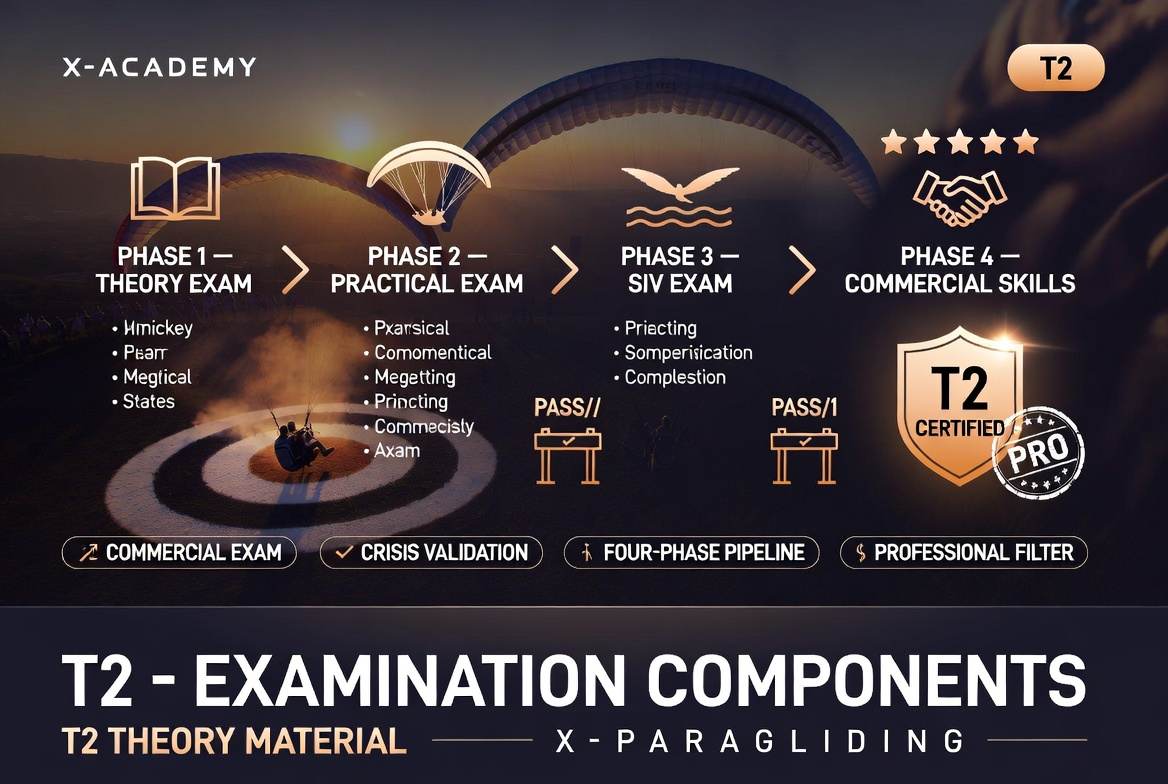
The T1 Category Examination is the final filter that confirms a pilot is ready to take responsibility for another human life. It is not merely a demonstration of skills; it is a test of adequate response under crisis conditions.
Here is an in-depth and comprehensive breakdown of the examination components:
1. Theoretical Component (Verification of Knowledge)
The theoretical exam tests the pilot’s ability to make the right decisions before they even set foot on the takeoff site.
Equipment Expertise: The pilot must know the maximum wear limits for every part of the tandem gear (carabiners, spreaders, reserve bridles). They must be able to explain why correct tandem reserve packing is critical and how different types of spreaders affect wing handling.
Meteorology (Tandem-Specific): A tandem pilot is required to possess "conservative meteorology" knowledge. They must identify signs of turbulence and increasing wind earlier than would be considered critical in solo flight.
Legal and Ethical Issues: The pilot must know the legislation within their scope of responsibility, passenger insurance terms, and FAI regulations. This forms the foundation of professional ethics.
2. Practical Component (Demonstration of Mastery)
The practical exam is conducted under strict supervision and requires the flawless execution of every element.
The Perfect Launch:
Control: The wing must rise symmetrically and stop at the zenith without any "overshooting."
Coordination: The pilot must demonstrate the ability to run in sync with the passenger. Any "sitting down" or premature termination of the run results in a failed exam.
$360^{\circ}$ Turns and Coordinated Flight:
The exam evaluates how smoothly and effectively the pilot manages a high-inertia wing. Turns must be fluid, without causing any discomfort to the passenger.
Rapid Descent (Emergency Maneuvers):
The pilot must perform "Big Ears" or a Spiral Dive. The focus here is not speed, but maintaining situational control and constant monitoring of the passenger's condition.
Landing Precision and Flare (20-Meter Radius):
This is the most challenging part. The pilot must land the tandem at a pre-marked target point.
Flare: The landing must be soft enough that the passenger can either transition into a run or stand still comfortably on their feet.
Why are these components important?
Together, these examination components establish the pilot's "Professional Authority":
Theory minimizes unplanned risks.
The Perfect Launch ensures a safe start to the flight.
Maneuvering proves that the pilot is flying the wing, rather than the wing flying the pilot.
Precision Landing is the guarantee that the passenger returns to the ground unharmed and with positive emotions.