 Back to Blog
Your First Tandem Paragliding Flight: What to Expect
A first-timer's guide to tandem paragliding in Georgia: booking, the safety briefing, takeoff, what to wear, and honest answers to common worries.
A first tandem flight asks surprisingly little of you. No experience, no special fitness, nothing braver than a few running steps. You book online, meet your certified pilot at the site, get a short briefing, and a few minutes later you are gliding — the pilot does the flying, you do the looking. Here is how the day actually goes.
Booking Online — No Prepayment Needed
Start on the booking page: pick a flight site, a flight type, a date. Done. We don't take online payment and we don't ask for a card — you pay on-site, in cash or as agreed with the operator, and only if you actually fly. In mountain sports that detail matters more than people expect. Weather moves plans around, and you should never be charged for a flight that hasn't happened.
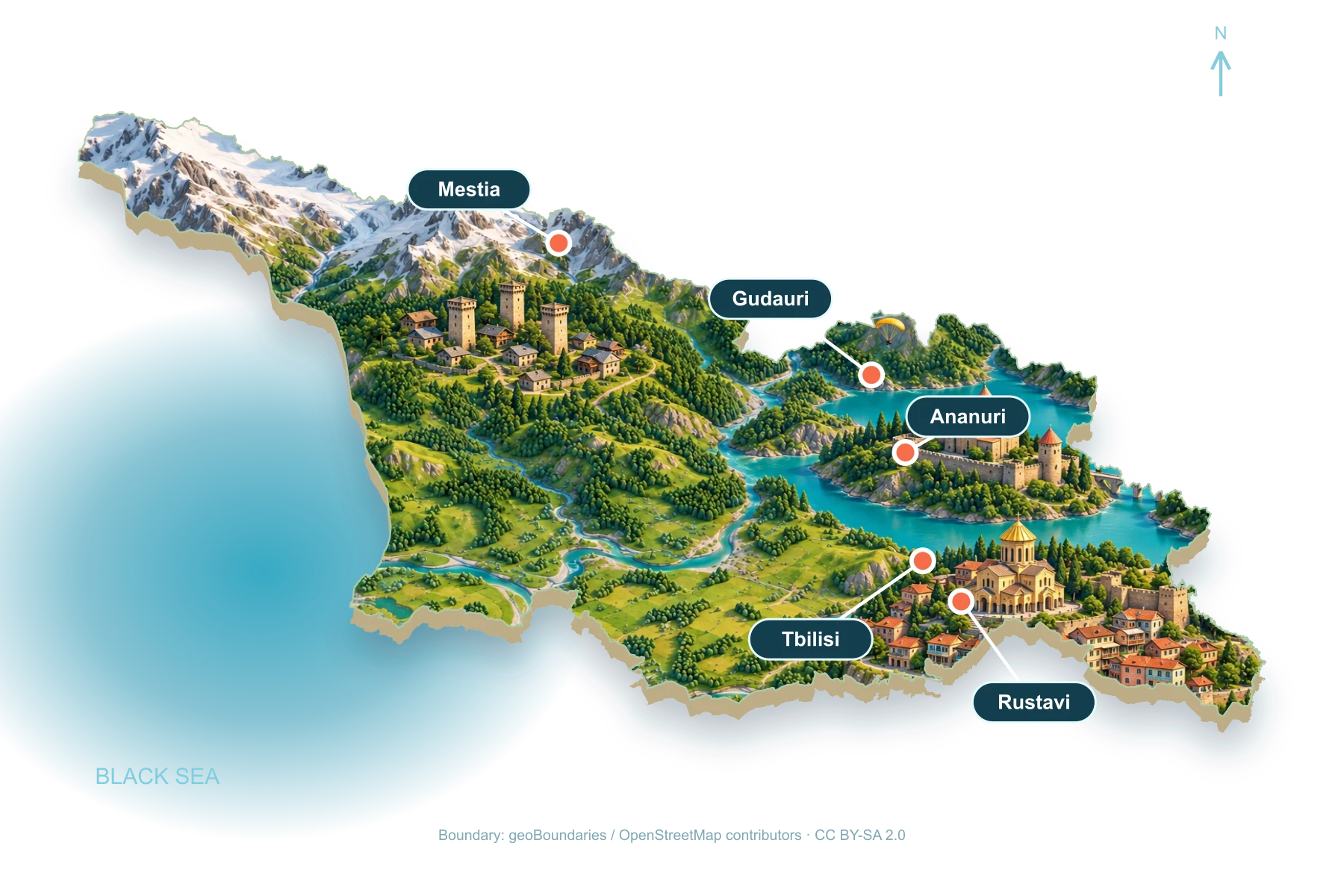
Every pilot and company on the XParagliding platform is verified, and instructors are trained to international standards, including the APPI framework. All five sites fly year-round, weather permitting — and the pilot always has the final say on conditions.
| Flight site | Launch altitude | Tandem price (from–to) |
|---|---|---|
| Gudauri | 3,000 m | ₾350–450 (~$130–170 / €115–145) |
| Mestia (Svaneti) | 3,150 m | ₾450–550 (~$165–200 / €145–175) |
| Ananuri | 1,350 m | ₾450–550 (~$170–210 / €145–175) |
| Tbilisi | 750 m | ₾250–350 (~$95–130 / €80–115) |
| Rustavi | 750 m | ₾250–350 (~$95–130 / €80–115) |
The pricing overview breaks down what each package includes. And if you're torn between sites — the Greater Caucasus panorama above Gudauri, say, or the high-mountain flying near Mestia — the individual site pages will help you decide.
Arriving at the Meeting Point
On the day, you meet your pilot at the agreed spot for your site. Don't be surprised if the first thing they do is study the sky rather than shake your hand — wind speed, wind direction and visibility all have to line up, and the same check happens again up at the launch. Mornings tend to be calmer, but every window gets judged on the day. If conditions aren't safe, the flight waits. We know that stings when you've built your trip around it, but it's the core of how a responsible operator works — more on this on the safety page.
The Briefing and Gearing Up
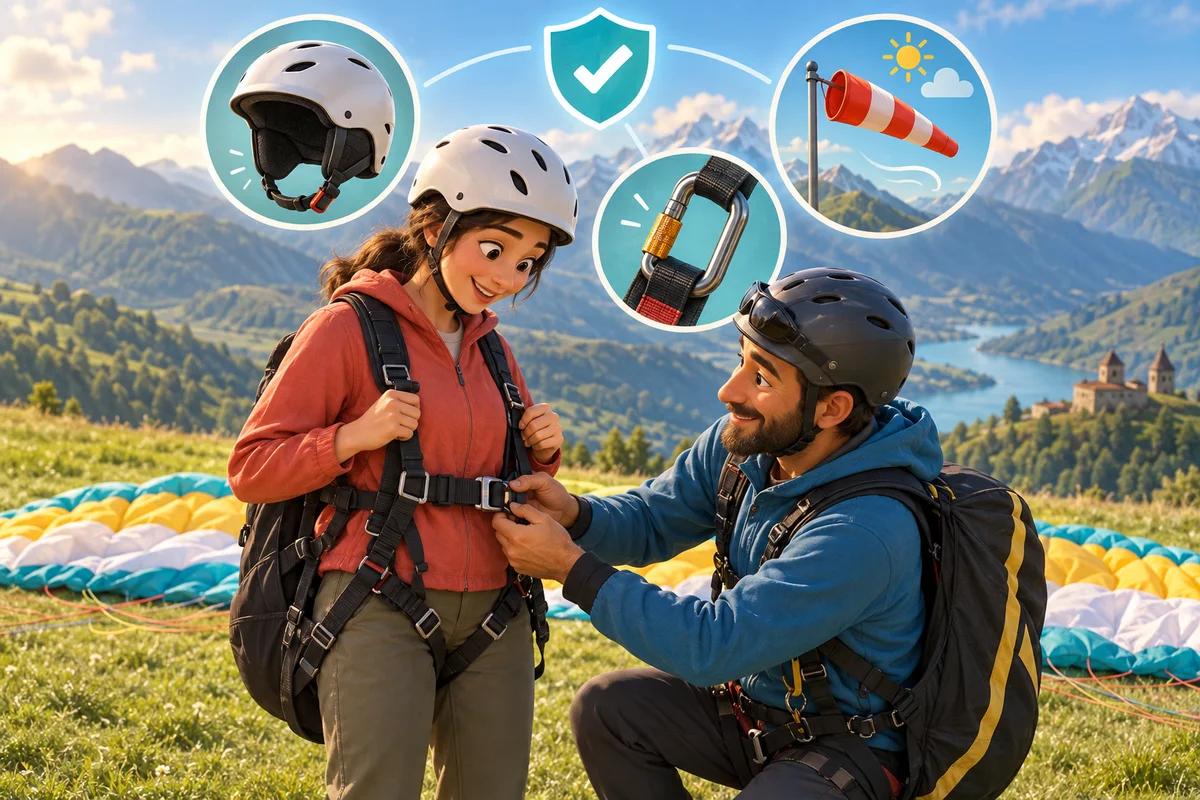
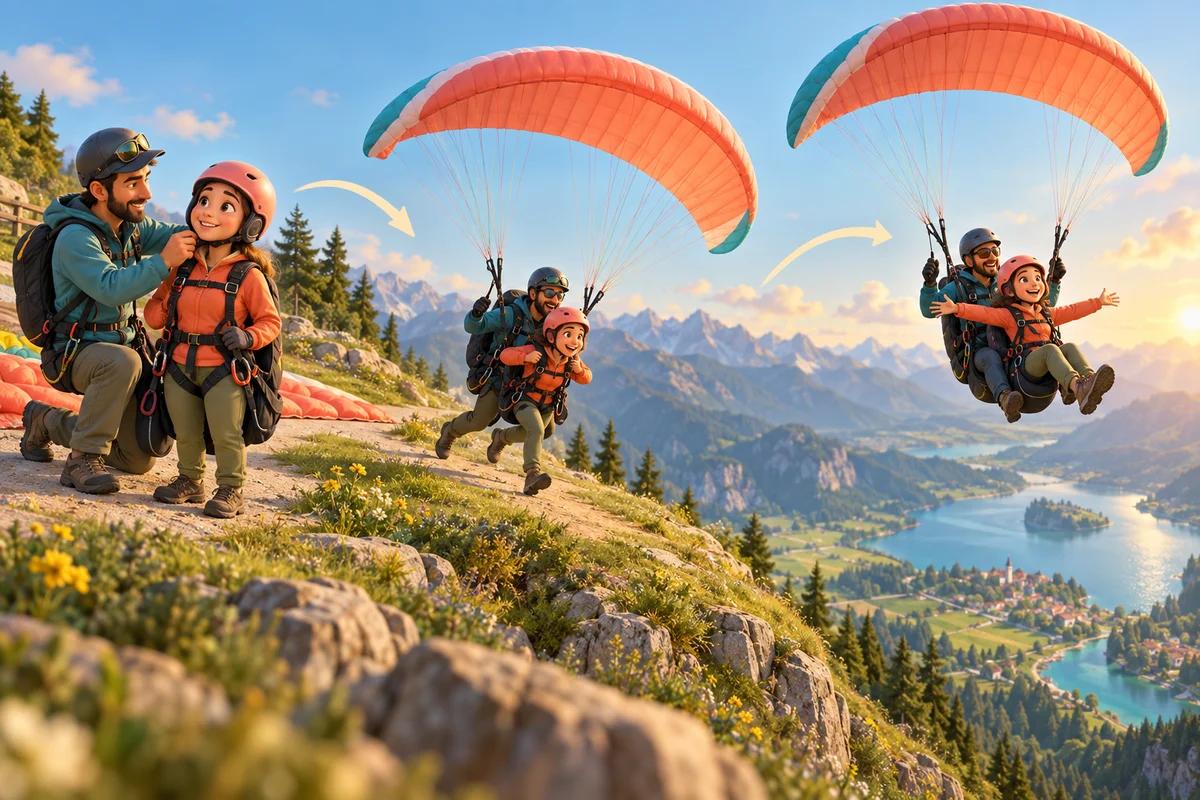
Before takeoff comes a short, plain-language briefing: how the launch works, what your job is (very little) and what the pilot's job is (everything else). Then you gear up — a passenger harness that clips securely to the pilot's harness and the wing, plus a helmet. Once you're airborne the harness turns into a comfortable seat; most first-timers compare it to sitting in an armchair with the world underneath.
This is also the moment to ask anything at all. Nervous questions are normal questions — we've heard them all.
Takeoff: A Few Running Steps
The part people dread most is the simplest part. You stand next to your pilot, clipped in. On "go", you both take a few running steps down a gentle slope. The wing comes up overhead, fills with air, and — usually before you expect it — the ground just isn't there anymore. No jumping. No cliff edge. No leap of faith. You run, and then you're flying.
What the Flight Feels Like
Most first-timers are surprised by the same thing: how calm it is. This isn't a rollercoaster. It's quiet, smooth gliding — wind in your ears, the landscape sliding past slowly below. The pilot controls the wing the whole time, so you're free to look around, chat, or say nothing at all.
And you set the tone. Want the gentlest ride possible? Say so, and your pilot keeps everything soft and level. Want more? Ask — when conditions allow, pilots can add more energetic turns. Photo and video options such as GoPro recordings are available at most sites; the exact packages vary by site, so confirm yours when you book.
What to Wear
- Layered clothing. Mountain launch sites run noticeably cooler than the valley — bring a warm layer even in summer.
- Closed, sturdy shoes. Trainers or hiking shoes. No sandals, no heels — we mean it.
- Sunglasses. The light up there is strong, and they keep the wind out of your eyes.
- Hair tied back if it's long. The helmet and the wind will both thank you.
What to Bring (and What to Leave)
An ID document, in case it's requested, and that extra warm layer. Everything else, think twice. Anything that can slip out of a pocket mid-flight — keys, coins, an unsecured phone — stays on the ground or gets zipped away properly. Your pilot will tell you what can safely come along.
Common Worries, Answered Honestly
"I'm afraid of heights." Here's what many nervous passengers discover: fear of heights behaves differently in flight. It's usually triggered by standing at an edge while connected to the ground. Up there, with no edge and nothing dropping away under your feet, most people feel calm instead of afraid — plenty say the fear simply disappears once the wing is flying.
"What if I feel motion sick?" Eat light beforehand, and once you're up, look at the horizon rather than straight down. And tell your pilot how you feel — a gentler flight path helps, and adjusting is no trouble at all.
"Am I fit enough?" If a few running steps are within reach, so is tandem flying. No training requirement, no minimum fitness, nothing to memorise. The restrictions that do exist — around age or health, for example — get confirmed individually when you book.
The Landing
Soft and unhurried. As the landing field approaches, your pilot repeats the brief instructions from the ground — usually just lift your legs and let them manage the touchdown. Most landings end in a gentle slide or a few walking steps. Then comes the part nobody briefs you for: the grin that won't leave your face for the rest of the day. (One more thing worth knowing — reviews on our platform can only be left by customers whose flight was actually completed, so what past passengers write reflects real flights.)
FAQ
How long does the whole experience take?
It depends on the site, the package and the weather. On top of the airtime itself, allow time to meet your pilot, go through the briefing and get up to the launch. When you book, your pilot confirms realistic timing for your chosen site and date.
Can I bring my phone for photos?
Only if it's properly secured — a phone dropped at altitude is gone for good, so follow your pilot's lead. The easier route: GoPro photo and video packages are available at most sites, which keeps your hands free and still gets the memories home.
Can children or older people fly tandem?
Often yes — but we confirm this individually at booking, because it depends on the site, the conditions and the passenger. Send us the details when you book and you'll get a straight answer before committing to anything.
Do the pilots speak English?
The platform runs in six languages — Georgian, English, Russian, German, Turkish, and Arabic — though language ability varies from pilot to pilot. If a specific language matters to you, mention it at booking and we'll match you accordingly. More answers live on our FAQ page.
So — those few running steps. Pick your site, pick a date, and book your tandem flight online. No prepayment, no card. Just you, a certified pilot, and the sky over Georgia.