On this page
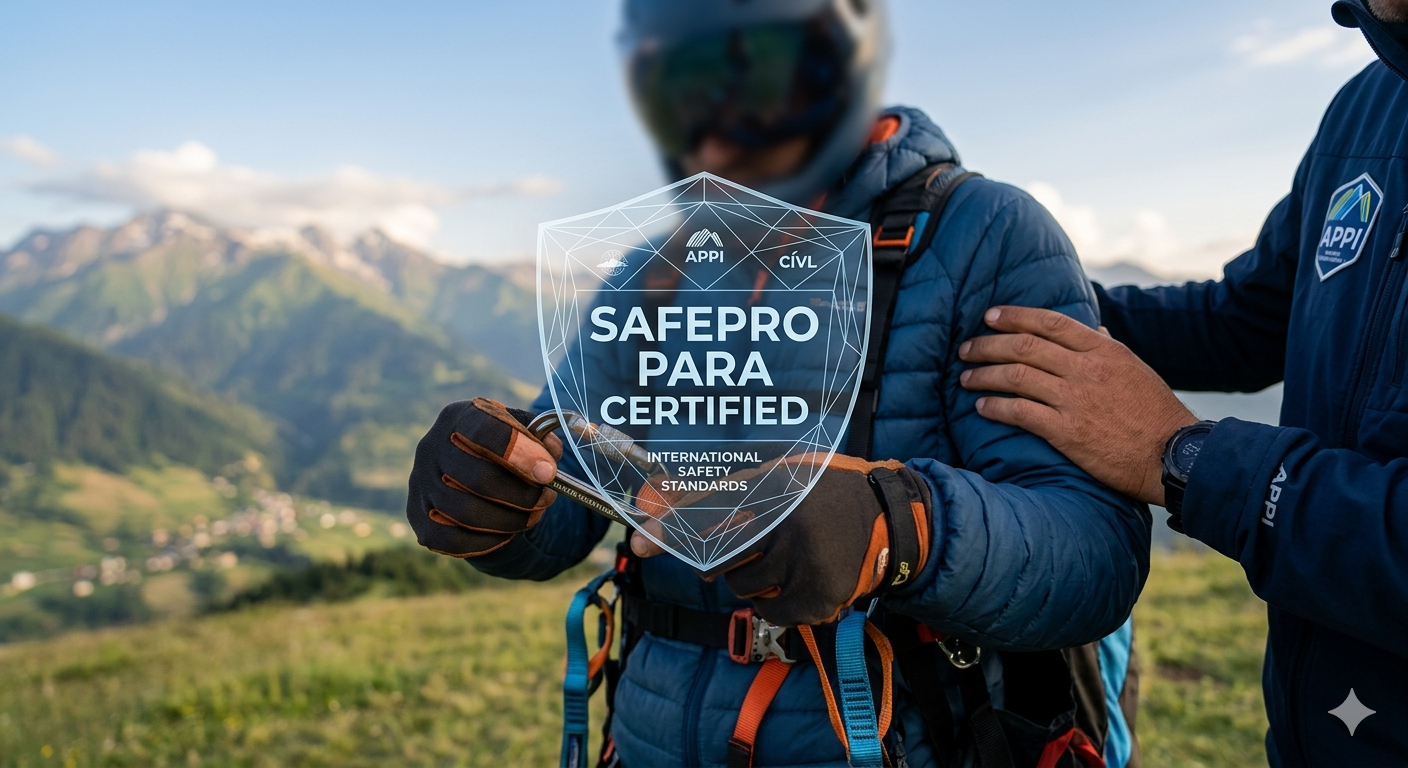
SafePro Para is the FAI/CIVL recommended framework for progressive paragliding training and safety. National organisations can use it to compare their programmes; it is not a universal international flight licence.
Five core stages
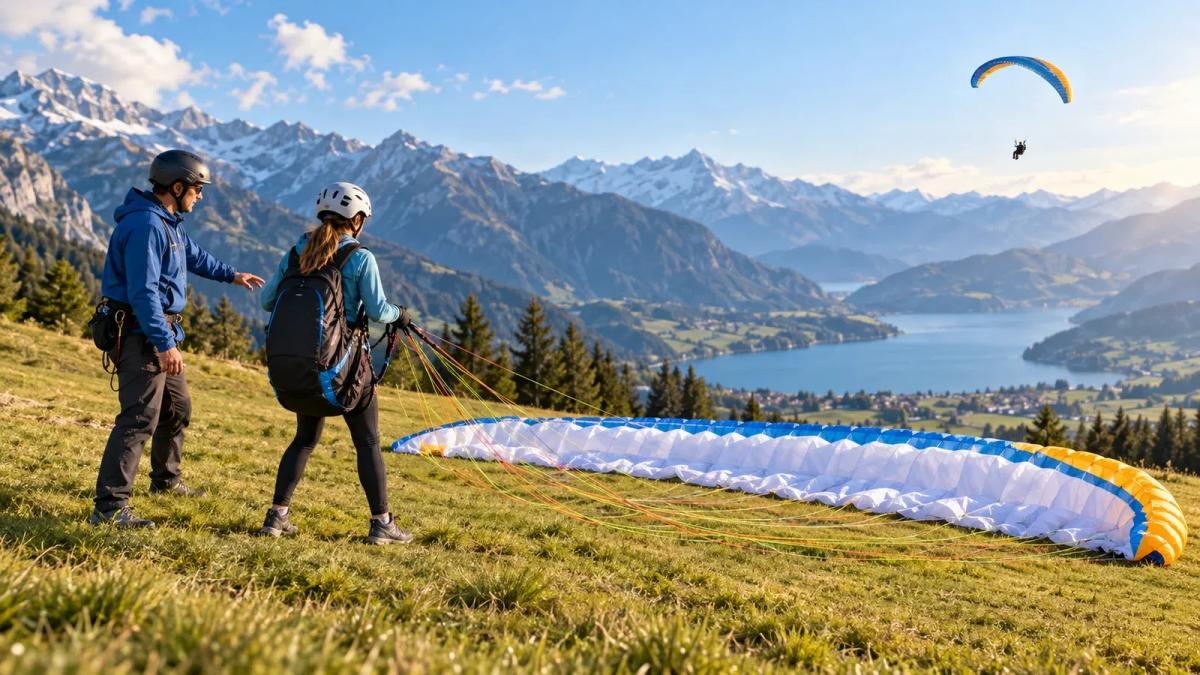
- 1 — Ground Skimming: ground handling fundamentals and low, supervised flights.
- 2 — Altitude Gliding: planned flights and landings with height and manoeuvring space.
- 3 — Active Flying: active control and preparation for demanding conditions under appropriate instruction.
- 4 — Soaring: using lift and making sound flight decisions within suitable conditions.
- 5 — Senior Pilot: established experience in one or more advanced practices and responsible autonomy.
A stage is more than theoretical knowledge
SafePro Para addresses practical skills, knowledge, experience and safety attitude at each stage. Recognition depends on assessment by the relevant national or authorized system. Finishing an online course cannot replace that assessment.
Additional qualifications
Non-commercial tandem is described as a separate sixth stage; specialized ratings also cover areas such as accuracy, distance, racing and aerobatics. Senior Pilot status does not grant these automatically. Appropriate training, assessment and local rules still apply.
The IPPI card can communicate how a national rating maps to SafePro Para. It is valid only with a current national licence or rating card and is not a flight permit.
Purpose and structure of SafePro Para
SafePro Para is a recommended FAI/CIVL training framework for gradual development in paragliding. Its five core stages move from easier to harder tasks, lower to higher flights and basic to advanced competence, with gaps in progression treated as a safety concern. Each stage concerns knowledge, practical skill, experience and safety attitude, not merely a title learned from an article. National federations may use their own programmes while comparing their stages with SafePro. Actual assessment, privileges and conditions for flight remain subject to the responsible national system and local rules.
Stages 1–2: Ground Skimming and Altitude Gliding
Ground Skimming describes the first stage of ground control and initial, low-level practice in suitable conditions; it is not permission for unsupervised flight. Altitude Gliding adds height and space for manoeuvring, but the SafePro description explicitly excludes soaring at this stage. Progression is not decided by flight count or a theory quiz alone. An instructor or authorized national system must assess the relevant practical skills, decisions and safety attitude. This article identifies the difference between stages; it is not a procedure for attempting a launch or manoeuvre without supervised training.
Stage 3: Active Flying
SafePro Para’s third stage, Active Flying, develops understanding of active wing control and preparation for more demanding air. The official stage description includes preparation for turbulence and knowledge of recovery and descent techniques. That description is not an instruction to try those techniques after reading a web page. Suitable supervision, an appropriate training setting and practical assessment are essential. A learner should recognize the limits of current competence and postpone a flight when the conditions or proposed task exceed them. An online theory lesson does not attest that stage 3 skills have been demonstrated.
Stages 4–5: Soaring and Senior Pilot
SafePro Para stage 4, Soaring, concerns use of ridge and thermal lift with appropriate decisions. Stage 5, Senior Pilot, describes mastery of one or more advanced practices. The distinction matters: being able to soar is not the same as having demonstrated an advanced discipline. Neither stage is a universal licence, and a stage title alone does not state what a pilot may do at a particular site. The responsible national system determines assessment and recognition. Before each flight the pilot still evaluates site rules, weather, equipment, airspace and personal readiness rather than relying on a stage label.
Additional and specialized ratings
Beyond its five core stages, SafePro Para describes a sixth, non-commercial tandem stage. It also identifies additional ratings for Accuracy, Distance, Racing and Aerobatics. These are not automatic consequences of progressing through the five general stages. In particular, a Senior Pilot label does not itself authorize tandem flying or aerobatics. A discipline may require separate instruction, assessment, equipment, insurance and permission under local rules. Confirm the current national and activity-specific requirements before planning any such flight; this theory article cannot establish specialist proficiency.